Skip to content
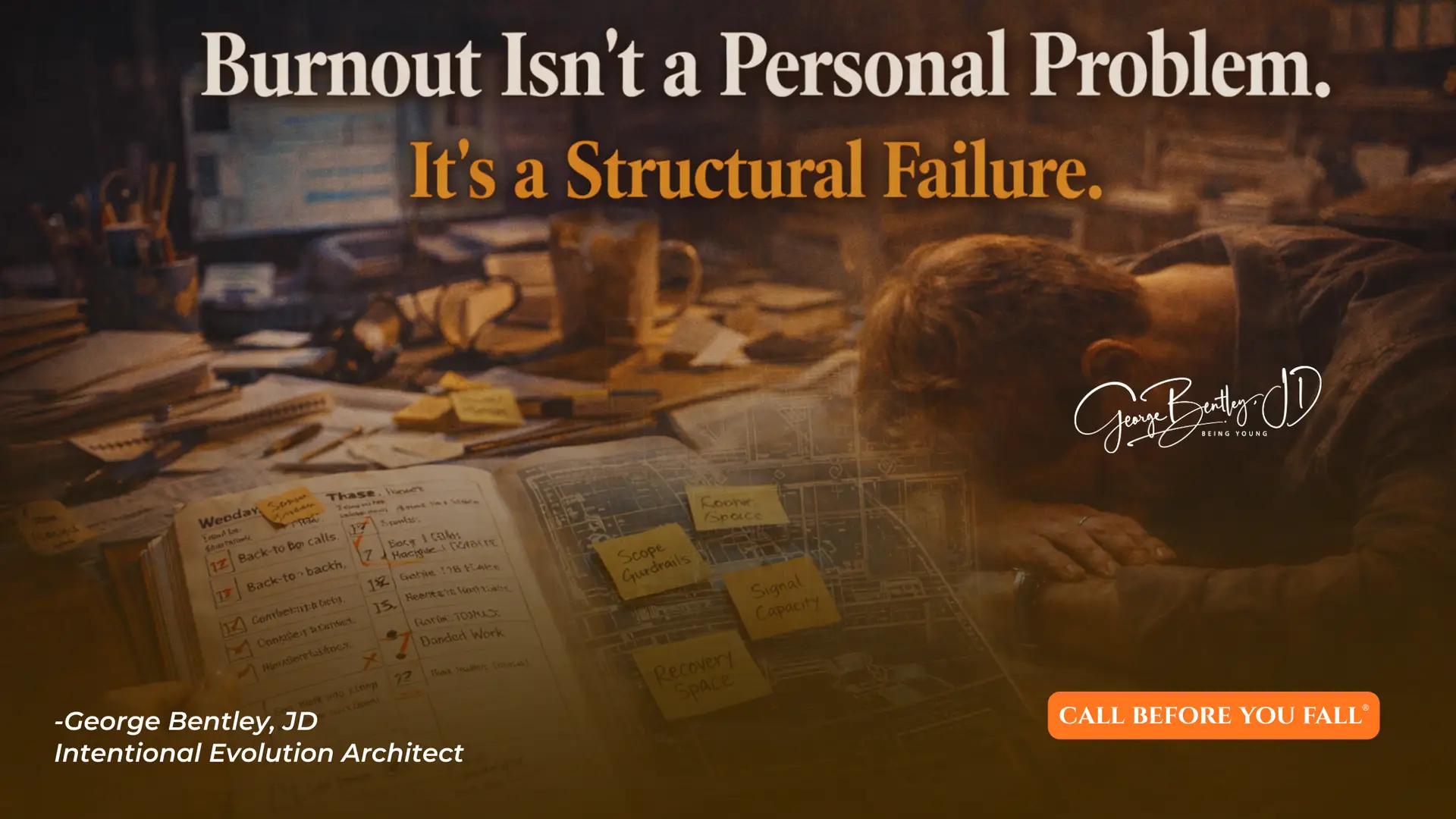
You’re not burned out because you’re weak. You’re burned out because your structure was never designed to hold your signal.
No amount of breathwork, baths, or vacations will fix it. Because what you need isn’t self-care. You need structural resilience.
Enemy Phrase: “Take better care of yourself.”
New Phrase: “Structural resilience.”
The Contradiction
We’re told to manage stress with rituals, hacks, and morning routines.
But rituals don’t matter if the structure is broken. If your calendar, contracts, and commitments are misaligned with your nervous system, burnout is built-in.
Scene
A high performer is told: “Just take a weekend off. Go recharge.”
They come back Monday to a calendar full of back-to-back calls, emotional labor, and urgency loops.
They didn’t need a vacation. They needed a blueprint.
The Truth
Structural resilience means:
– Designing your life to match your bandwidth
– Creating load-bearing rituals, not just relief rituals
– Embedding recovery into your workflow, not as an afterthought
Burnout isn’t cured. It’s engineered out.
Language Installation
“Take better care of yourself” centers the individual.
Structural resilience upgrades the ecosystem.
It’s not about breaks. It’s about building.
Evidence
Organizational psychology and nervous system research show that environment design, boundary enforcement, and workflow predictability reduce stress and increase long-term performance.
Rituals help. But structure protects.
Integration
This week:
– Identify one structural weak point: schedule, boundary, obligation
– Reinforce it: eliminate, delegate, or design it differently
– Test your changes under mild pressure
Build recovery into the foundation, not as a patch.
CTA
Stop blaming yourself for collapse.
Start engineering resilience at the source: – Your agreements – Your bandwidth map – Your workflow design
That’s structural resilience. You don’t need to cope better. You need to build smarter.