Skip to content
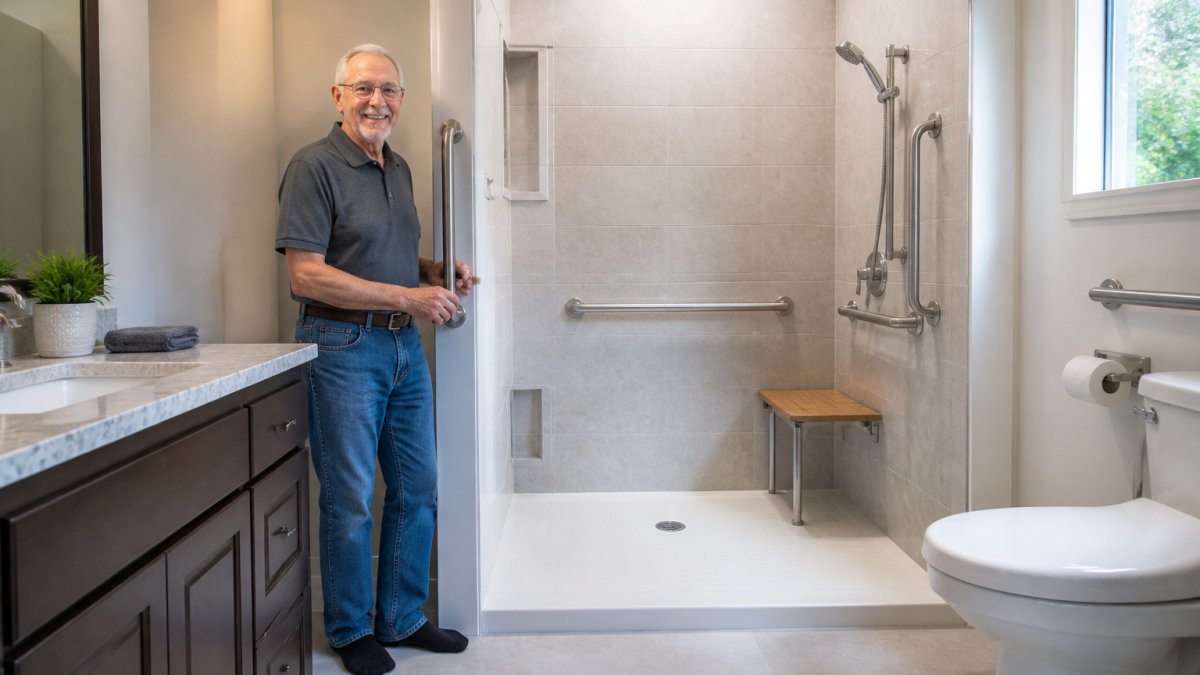
Table of Contents
- Start With a Room-by-Room Bathroom Safety Assessment for Seniors
- Install Grab Bars for Seniors Where Your Body Actually Needs Them
- The Bathroom Safety Equipment for Elderly Adults That Earns Its Place
- How to Prevent Bathroom Falls During Transfers In and Out of the Tub
- Walk-In Tub Safety for Seniors: What Actually Reduces Risk
- What to Do After a Bathroom Fall or Near-Fall
- Conclusion: Build Safety Before You Need It
- Frequently Asked Questions
Last Updated: October 14, 2026
Start With a Room-by-Room Bathroom Safety Assessment for Seniors
Your bathroom may look safe. That is not the same thing as being safe.
I founded Bentley Baths after my own mother fell in a traditional bathtub. That fall taught me something I have spent more than 20 years passing along: most bathroom falls are predictable, and predictable problems can be fixed before anyone gets hurt.
A bathroom safety assessment for seniors is a structured walk-through that identifies fall hazards and ranks them by risk.
Before you buy anything, look at everything.
The 10-Minute Walk-Through: What to Look For
Grab a notepad. Stand in the doorway and ask: what could I grab, trip on, or slip on?
- Floor: wet spots, loose rugs, slick tile, worn finish
- Tub and shower: high step-over, no seat, no grab bars, glass doors that swing inward
- Toilet: low seat, nothing to hold onto, cramped space
Write it down. Do not fix anything yet. Diagnosis comes first.
Do this walk-through twice: once in daylight, and once at night with only the lights you would normally use. Most people find hazards at night that they never notice during the day.
Install Grab Bars for Seniors Where Your Body Actually Needs Them
Grab bars for seniors work when three things are true at once: they are anchored into structure, they sit where your hand naturally reaches, and they are rated to hold real body weight.
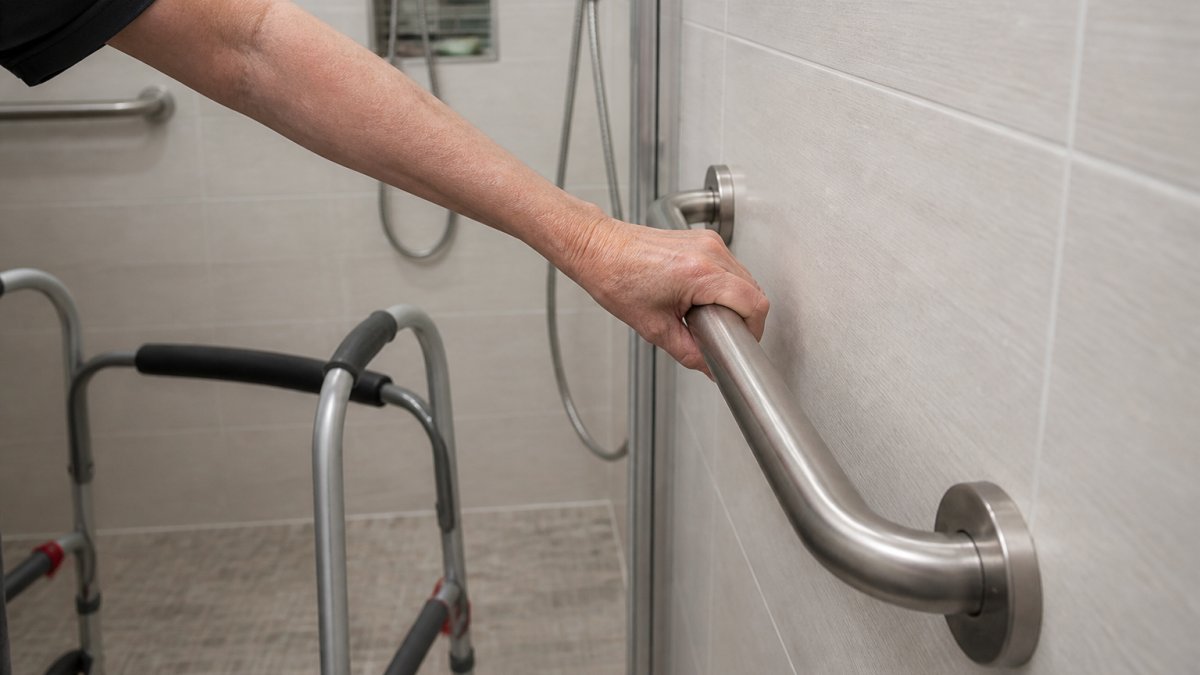
Here is the uncomfortable truth: a towel bar holds towels. It did not secretly graduate from structural engineering school. I have watched a grown man grab one during a stumble and ride it right off the wall.
Placement: Where Your Hand Actually Goes
Forget symmetry. Bars go where you bear weight, not where they look balanced.
- Beside the toilet: one horizontal bar, mounted at roughly forearm height when you are seated, positioned on the side you use to push up. If you have a weaker side, that is the side that needs the bar.
- At the shower entry: a vertical bar just inside the threshold, so your hand finds it before your foot commits.
- Inside the shower: a horizontal bar at seat height, plus a vertical bar if you stand.
A common pattern I see: people install one bar at the back of the shower because that is where the tile looked empty. That bar is useless. You never stand there.
Anchoring: What Actually Holds Weight
This is the part most articles skip, and it is the part that decides whether you get hurt.
A grab bar must fasten into wall studs, into blocking installed behind the wall, or into a rated anchor system designed for the wall you have.
What does not work, ever:
- Towel bars, soap dishes, and shower door frames
- Drywall anchors alone, no matter what the package claims
- Suction-mounted bars, which can release without warning under real body weight
If a bar flexes, moves, or makes noise when you pull on it, stop using it and get it checked.
Suction-cup grab bars can release without warning when they bear real weight. They are not a substitute for anchored bars. If a fall happens because a suction bar let go, the injury is on you, not the manufacturer.
Test every installed bar the way you would actually use it: grab it, lean on it, and pull down with real weight. If it moves at all, it is not done.
If You Rent, or Your Walls Will Not Take a Bar
Renters face a real problem. Landlords are often fine with a grab bar once you explain that it reduces liability, and a written request helps. If drilling is off the table, ask a professional about floor-to-ceiling tension poles rated for transfer support, or a freestanding transfer bench with its own frame.
Before you drill anything, answer one question: what is behind this wall? If you do not know, find out first. Diagnosis before purchase applies to grab bars too.
The Bathroom Safety Equipment for Elderly Adults That Earns Its Place
Bathroom safety equipment for elderly adults is worth buying when it removes a specific hazard you identified in your assessment. It is not worth buying because it was on sale or because your neighbor swears by hers.
Here is the question almost nobody asks before they buy: what is this piece of equipment supposed to make easier? If you cannot answer that in one sentence, put it back.
The Equipment That Consistently Earns Its Place
- Nonslip mats or a textured non-slip surface inside and outside the tub or shower. Look for a mat with drainage holes and a textured underside, and replace it the moment it stops gripping or starts curling at the edges.
- A shower chair or bath seat so you can sit while washing. A seat with legs and rubber feet beats a stool every time. If you use a transfer bench, it straddles the tub wall so you never have to step over anything.
- A handheld shower head on a slide bar, so you control the water without standing and can rinse while seated.
The Equipment That Often Disappoints
- Suction-mounted bars, for the reasons above
- Flimsy plastic stools with no rubber feet
- Anything marketed with urgency or a countdown timer
If a salesperson has to call a manager three times before midnight, somebody may be performing dinner theater in your bathroom.
Match the Equipment to the Person, Not the Catalog
This is the part the tip lists leave out. Two people with the same diagnosis need different equipment, because they have different bodies, bathrooms, and habits.
Ask these questions before you buy:
- What is getting harder? Standing up from the toilet? Stepping over the tub wall? Reaching the faucet? The answer points to the equipment.
- Can you get up from a low seat without using your arms? If not, a raised seat with arms matters more than a fancy shower head.
- Do you have the strength and balance to sit down on a shower chair safely? If not, a transfer bench is the safer choice.
When to Bring In a Professional
If you are not sure what you need, that is not a failure. It is a signal. An occupational or physical therapist can evaluate how you actually move and recommend equipment that fits your body.
A caregiver should not guess either. Lifting, steadying, and transferring another adult is a skill, and doing it wrong can hurt both people. If you are the one helping, ask for training.
How to Tell If the Equipment Is Working
Equipment is not a one-time purchase. It is a system you maintain.
- Check the nonslip mat every week. If it slides, replace it.
- Check the shower chair feet every month. Rubber dries out and cracks.
- Check the grab bars every few months. Pull on them. If anything moves, stop using them.
Equipment does not prevent falls. The right equipment, installed correctly, used consistently, and checked regularly, reduces risk. That is a different claim, and it is the honest one.
How to Prevent Bathroom Falls During Transfers In and Out of the Tub
Transfers are where most bathroom falls happen. Getting in, getting out, sitting down, standing up. The movement itself is the risk, not the room.
A safe transfer means three things: something solid to hold, a stable surface to sit on, and no rush. If any of those three is missing, the transfer is a gamble.
Safe Transfer Techniques for Bathing and Toileting
Try these steps, and adapt them to your own body:
- Prepare first. Dry the floor, place the towel within reach, and set the water temperature before you move.
- Sit before you swing. Sit on the edge of the tub or the shower chair, then swing both legs together.
- Keep three points of contact. Two hands and one foot, or two feet and one hand, at all times.
- Use the bars, not the walls. Walls feel solid until your wet hand slides down one.
- Stand slowly. Count to five before you take a step. Blood pressure drops are real.
- Dry off seated. Never step out onto a wet floor while you are still dripping.
For toileting, the same logic applies. Sit back until you feel the seat. Use the bar to lower and raise yourself. Keep the floor dry.
If you use a cane or walker, keep it inside the bathroom, not in the hallway. You will not go back for it.
Walk-In Tub Safety for Seniors: What Actually Reduces Risk
Walk-in tub safety for seniors comes down to three things: a low threshold, a built-in seat, and a door that seals properly.
I favor walk-in tubs in many situations. I will also tell you when one is not right for you, because I have done exactly that for clients.
What a walk-in tub does well:
- Removes the high step-over that causes most tub-entry falls
- Provides a seated bathing position with back support
- Puts grab bars where your hands actually go
What sellers often leave out:
- Filling and draining take time, so you sit in the tub while it fills
- The door must be closed and latched before you run water
- Not every bathroom has the space or the plumbing layout for one
For our Denver-area projects, most walk-in tub projects run approximately $15,000 to $18,000 installed, unless unusual construction changes the scope.
What to Do After a Bathroom Fall or Near-Fall
A near-fall is data. Treat it that way.
After any fall or near-fall, do these things in order:
- Get checked. See a healthcare provider, even if nothing hurts. Some injuries show up later.
- Write down what happened. Where were you? What were you doing? What did you grab?
- Review medications. Ask your provider or pharmacist whether anything you take can affect balance or blood pressure.
- Re-run the assessment. Go back to the walk-through and find the hazard you missed.
- Fix the top hazard first. Not all of them. The one that caused this event.
- Tell someone. A family member, a caregiver, a neighbor. Silence is how the next fall happens.
If you live alone and you have had two or more near-falls in a year, that is a pattern. Patterns do not fix themselves.
One fall is an accident. Two near-falls in the same spot is a design problem. Fix the design, not your balance.
Conclusion: Build Safety Before You Need It
Here is the question I ask every client: are you actually safe, or have you simply been lucky?
Luck runs out. Design does not.
If you want a professional set of eyes on your bathroom, Bentley Baths offers a free in-home or virtual evaluation by an age-in-place specialist.
You can also request a Bathroom Safety Audit or simply call and talk it through.
Reach us at BentleyBaths.com or 800-688-0055.
Frequently Asked Questions
Where should grab bars be placed in a bathroom?
Put them where your hands already reach for support: beside the toilet, along the tub or shower entry, inside the shower at hip and shoulder height, and near the sink if balance is shaky. The bar should be anchored into studs or blocking, not drywall alone. A towel bar is not a grab bar, and it will not hold your weight. If you are unsure, a bathroom safety assessment for seniors can map the right spots for your body and your layout.
Are non-slip mats enough to make a bathroom safe?
No. Non-slip mats help with slippery surfaces, but they do not fix the bigger risks: no support to hold, poor lighting, a high tub wall, or a toilet that sits too low. Think of mats as one layer. Grab bars, a bath seat or shower chair, brighter lighting, and clear walkways do more to reduce fall risk. If you have already had a near-fall, mats alone are not a plan.
When should a senior have a bathroom safety assessment?
Do it before a fall, not after. Signs it is time: you steady yourself on the vanity, you avoid showering when alone, you have had a near-miss, or a new medication makes you dizzy. A free safety assessment walks the room, checks grab bar anchoring, lighting, floor surfaces, and transfer paths, then gives you a prioritized list. You can also start with the free Safe Bathing Course at bentleybaths.com/safe-bathing-course.
Does a walk-in tub really prevent falls, or is it just marketing?
A walk-in tub removes the hardest move in bathing: stepping over a high tub wall. That step is where many bathroom falls happen. A low threshold, a built-in seat, and grab bars give you something to hold and a place to sit. No product guarantees you will never fall. Walk-in tub safety for seniors depends on proper installation, correct sizing, and using the seat and bars every time, not just on the tub itself.