Skip to content
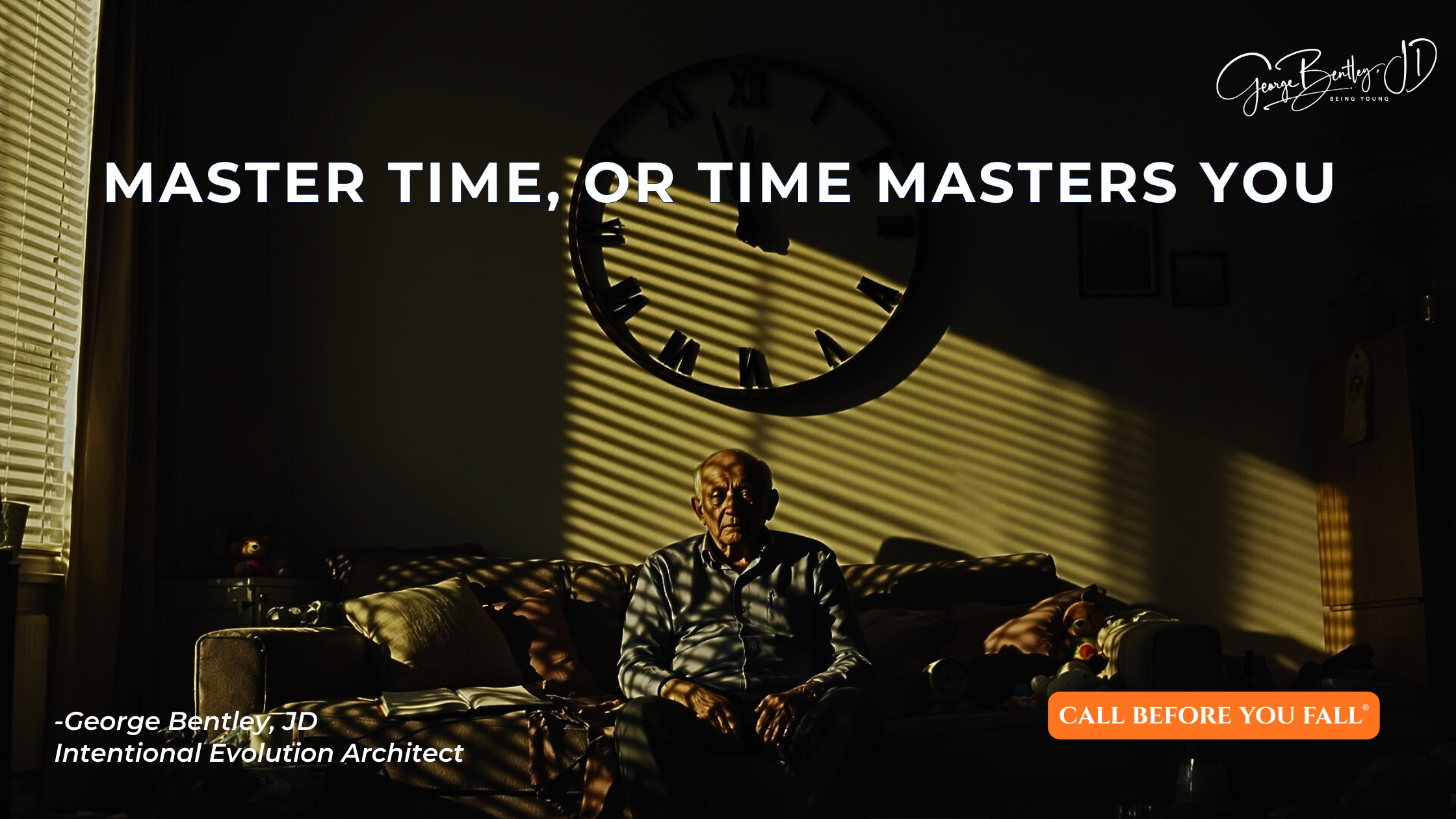
Time does not care how wise you are.
It does not care that you raised kids, built a career, survived a divorce, buried friends, rebuilt your knees, rebuilt your faith.
Time is polite. Then it steals your afternoon.
If you feel like the day runs you, the calendar isn’t the problem. Your nervous system is.
Most people think time mastery is a planner problem. It’s a regulation problem. When your body is in threat, time becomes a bully. When your body is steady, time becomes a tool.
That’s rhythm command.
Enemy Phrase: “I’ll do it later.”
New Phrase: “Rhythm command.”
The Contradiction
Everybody says they want more time.
But watch what happens when they finally get it.
You retire. The day opens up. No commute. No meetings. No boss. Freedom, right.
Then the hours dissolve. Noon arrives like a jump scare. The day ends with vague shame and a little too much news. Tomorrow becomes the place where everything important lives.
That’s not laziness. That’s your nervous system avoiding friction.
“I’ll do it later” sounds harmless. It’s actually a time surrender. You hand the wheel to mood, to fear, to comfort. And time, like a teenager with your credit card, spends it fast.
Scene
A retired EMT told me he feels lazy now.
“I used to work 16 hour shifts,” he said. “Now, if I push too hard for a few days, I crash. Then I lose a week.”
I asked what his days look like.
He listed them like a police report. Doctor appointment. Grocery run. Help his daughter with childcare. Fix a cabinet. Scroll until his eyes felt dry. Feel guilty. Promise tomorrow.
Then he said the line that matters.
“I don’t know how to pace anymore. I either sprint or freeze.”
That’s the whole story.
If your system only knows sprint or freeze, time will always master you.
The Truth
Time mastery is not about squeezing more into the day.
It’s about setting a rhythm your body can trust.
Rhythm command means you lead your day with a pace that keeps you clear. You decide the beat before the world starts banging pots in your kitchen.
When your nervous system is dysregulated, you can’t feel time accurately. Ten minutes feels like a cliff. A phone call feels like a courtroom. A simple task feels like a threat. So you avoid it. You delay. You scroll. You clean the same counter four times like it’s a sacred ritual.
If you’ve ever postponed a “quick call” for three days because it might involve a menu, a human, and the words “press one,” you already understand this.
Not stupid. Not weak. Just unregulated.
You don’t need more willpower. You need a rhythm your nervous system signs.
Language Installation
“I’ll do it later” is a lie you tell yourself so you can stay comfortable today.
Rhythm command is the replacement. Two words that force a question.
Who is leading the day? Me, or my mood.
Say it when you feel the drift.
Rhythm command.
It should feel slightly annoying. Like a good coach. Like a seatbelt.
The Absurd Part
If time had an office, most of us would show up with a stack of forms and an emotional support latte.
“Hello, I’d like to file for more time.”
The clerk would squint at your paperwork.
“Have you tried not panicking at 2:17 PM?”
You’d blink.
“I, uh, no.”
“Denied. Next.”
Ridiculous. Also accurate.
Most people don’t need a new calendar. They need to stop panicking in the middle of the day and calling it a schedule issue.
Evidence
We know this from basic stress physiology and trauma informed practice.
When the nervous system is in fight, flight, or freeze, the brain prioritizes immediate relief. That’s why procrastination feels like relief, not sabotage. That’s why “later” feels soothing.
So the answer is not shame.
It’s regulation.
Not as a vibe. As a protocol.
The Rhythm Command Protocol
Here’s a simple three part structure that works for retirees, caregivers, busy professionals, anyone.
1) Set one anchor early
Before screens. Before news. Before other people’s chaos.
One anchor is a repeatable action that tells your body, “I lead today.”
Examples. A 10 minute walk. A glass of water and sunlight. A short stretch. A prayer. Three lines in a notebook.
It should be boring. It should be easy. It should be yours.
2) Pick the one move that earns tomorrow
Not ten tasks. One.
A phone call you’ve avoided. A strength session. A meal plan. The appointment you keep postponing. A conversation that clears tension.
If you do that one thing, tomorrow gets easier.
That is time mastery.
3) Close the day like you respect your future
Most people end the day by collapsing and bargaining.
“Tomorrow I’ll be better.”
That’s not a plan. That’s a guilt prayer.
Close the day with a small reset. Shut down screens 20 minutes earlier. Write the one move for tomorrow. Lay out what you need.
It’s not sexy. It’s salvation.
Rhythm command.
CTA
If you are serious about aging well, this is where it starts.
Not with supplements. Not with perfect routines.
With rhythm.
Today, catch yourself saying “I’ll do it later.”
Then replace it.
Rhythm command.
Choose one anchor. Choose one move. Close the day with respect.
Master time, or time will master you. Quietly. Daily. Until the years feel stolen.