 Skip to content

Last Updated: November 21, 2026
Quick Summary
Insurance rarely covers a full bathroom safety modifications project. Original Medicare generally excludes permanent remodeling, though it may help with portable equipment when a doctor documents medical necessity. Medicaid home and community-based services waivers are the most likely public payer, but eligibility and approved items vary by state.
- Portable items you can take with you are more likely to qualify as equipment than permanent changes.
- A prescription alone does not guarantee payment; the item must be medically necessary and documented.
- Medicaid waivers depend on functional eligibility, financial eligibility and whether the modification is on the state’s approved list.
- Ask your insurer for prior authorization and get approval in writing before any work begins.
- Homeowners policies usually cover sudden damage, not aging-related accessibility upgrades.
Table of Contents
- Why Insurance Rarely Pays for the Whole Bathroom Project
- Does Medicare Cover Bathroom Modifications?
- Does Medicaid Cover Home Modifications?
- Are Grab Bars Covered by Insurance?
- Comparing Funding Sources: Medicare, Medicaid, Private Insurance, VA and Homeowners Policies
- How to Request Insurance Coverage for Home Modifications
- Your Next Step Before Anyone Quotes You a Price
- Frequently Asked Questions
Why Insurance Rarely Pays for the Whole Bathroom Project
Most people assume insurance will cover a bathroom safety upgrade.
The short answer to the question in your title is that insurance rarely covers the whole project, and often covers none of the permanent work.
Let me explain the distinction that matters most. A grab bar you can unbolt is treated differently from a wall you have to open up.
Does Medicare Cover Bathroom Modifications?
Original Medicare generally does not pay for permanent bathroom remodeling. If you are still in the research stage, a free Safe Bathing Course can help you sort out which bathroom changes are worth discussing with your doctor in the first place.
For official details, start with Medicare.gov coverage information for durable medical equipment. Coverage rules change, so verify current benefits before you commit to any plan.
Equipment versus permanent changes
Portable equipment is the easier category. A shower chair, a raised toilet seat or a bedside commode may qualify for coverage when prescribed. Permanent changes are the harder category.
The practical test is simple. If you can take it with you when you move, insurance is more likely to consider it equipment. If it becomes part of the house, expect to pay for it yourself or look elsewhere for help.
What doctor’s prescription and medical necessity mean in practice
A prescription alone does not guarantee payment. The item must be medically necessary, meaning your physician or other qualified provider documents a clinical reason tied to your condition and mobility.
Ask your doctor to describe your specific limitations in writing, such as difficulty stepping over a tub edge or needing support to stand. Vague notes like “elderly, falls risk” tend to carry little weight with a claims reviewer.
Does Medicaid Cover Home Modifications?
Medicaid is the program most likely to help with a bathroom modification, and it is also the one that confuses people the most.
The part that matters for a bathroom is called home and community-based services, usually shortened to HCBS. The idea behind HCBS waivers is straightforward. Home modifications, including bathroom safety work, can appear on a state’s approved list of waiver services.
How the waiver mechanism actually works
A waiver is not a general home improvement benefit. It is a capped, targeted program with three gates you have to pass through in order:
- Functional eligibility. You must meet the state’s level-of-care criteria, which usually means a documented need for help with activities of daily living such as bathing, dressing, transferring or toileting. A clinician assessment drives this.
- Financial eligibility. You must meet the state’s income and asset limits for the waiver, which can differ from the limits for regular Medicaid.
- Service authorization. The specific modification must be on the state’s approved service list, and a case manager or waiver coordinator must authorize it in a person-centered service plan.
A grab bar, a roll-in shower, a tub cut, a walk-in tub, a raised toilet, lighting, slip-resistant flooring and widened doorways are the kinds of items that show up on some state lists. Not every state covers every item, and many states cap the total home modification benefit per person or per year. I will not quote a figure because the numbers change and they vary enormously.
How to find your state’s program
Do not start with a phone call to a general Medicaid line. Start with the specific program name. Search your state Medicaid agency’s website for “home and community-based services waiver” and “home modifications.” Then look for the waiver’s service definition document, which is the document that lists approved items and any dollar caps.
When you call, ask these questions in this order:
- Which HCBS waivers does this state operate, and which one covers home modifications?
- Is there a waiting list for that waiver, and how long is it currently?
- What are the functional and financial eligibility rules for that specific waiver?
Watch out: a state may cover the modification but require the work to be done by a contractor who has enrolled as a Medicaid provider, so confirm the contractor rules before you sign anything.
Where Medicaid stops
Medicaid is not a fallback for everyone. If you are not financially eligible, or if your state’s waiver has a long waiting list, the program will not solve your problem this year.
For official starting points, use Medicaid.gov home and community-based services information and your state Medicaid agency’s site. Rules change, so verify current benefits before you commit to any plan.
Are Grab Bars Covered by Insurance?
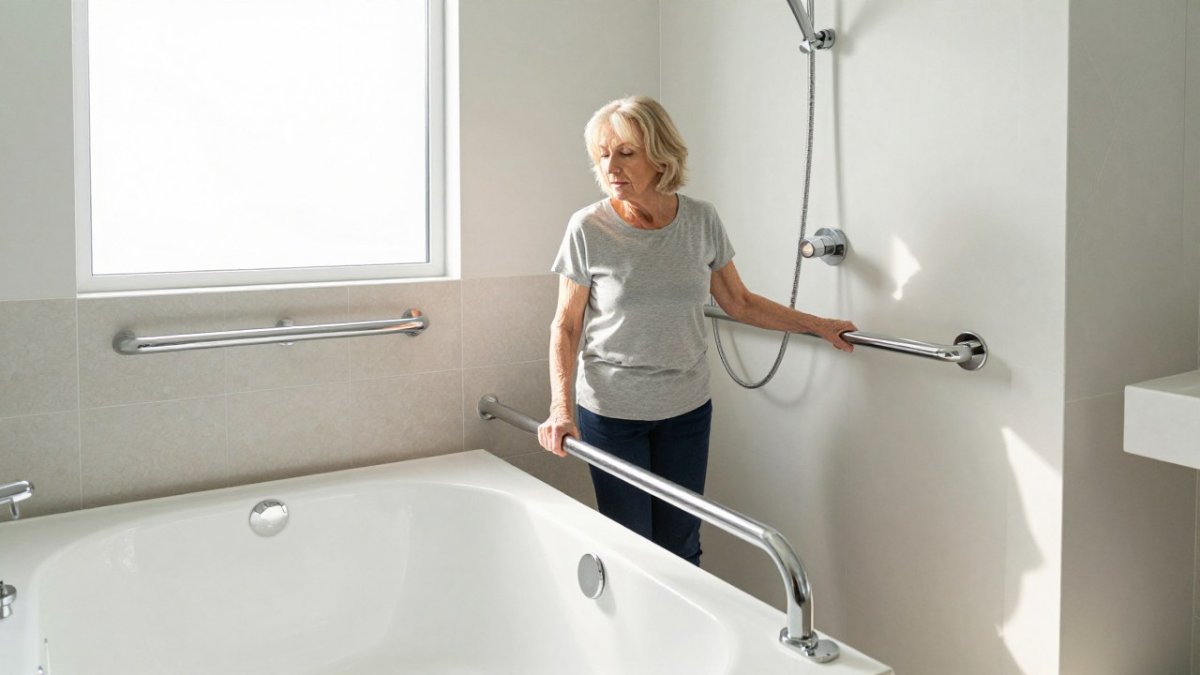
Sometimes, but not reliably. A grab bar installed as a medical device, with a documented need, may fall under durable medical equipment rules in some plans. A grab bar you buy at a hardware store will almost always be out of pocket.
Ask your insurer directly whether a bar installed by a licensed contractor would be considered for reimbursement, and whether they require pre-approval. Get the answer in writing if you can.
Comparing Funding Sources: Medicare, Medicaid, Private Insurance, VA and Homeowners Policies
Here is a general overview of how the main sources differ. Treat it as a starting map, not a guarantee.
| Funding Source | Typical Coverage | Main Limitation | Where to Check |
|---|---|---|---|
| Original Medicare | Certain medical equipment with a prescription | Generally excludes permanent remodeling | Medicare.gov |
| Medicaid waivers | Some modifications in participating states | Eligibility and approved items vary by state | Medicaid.gov |
| Private health insurance | Depends on the plan’s durable medical equipment benefit | Pre-approval and plan-specific rules | Your plan documents |
| VA benefits | Adaptive equipment and home modification programs for eligible veterans | Eligibility depends on service and rating | VA.gov |
| Homeowners insurance | Usually covers sudden damage, not aging-related upgrades | Rarely pays for accessibility projects | Your policy declarations |
Homeowners policies deserve special mention. They typically respond to covered perils like storm or fire damage. They rarely cover a bathroom upgrade made for aging in place, so do not count on them.
How to Request Insurance Coverage for Home Modifications
Requesting coverage is mostly a paperwork exercise, and paperwork is where most claims die. The families who get paid are rarely the ones who needed it most. They are the ones whose doctor wrote the right sentences and whose file was complete before the first phone call. Here is how to build that file.

Step 1: Get clinical documentation that a reviewer can act on
A prescription is not the same thing as documentation. A claims reviewer who has never met you needs to see a clinical reason tied to a specific functional limitation. Ask your physician or an occupational therapist to describe, in writing:
- The diagnosis and how it affects bathing, transferring or standing
- The specific limitation, such as inability to step over a tub rim or need for support to rise from a seated position
- The item or modification being requested and why it addresses that limitation
Vague notes like “elderly, falls risk” rarely carry weight. Specific functional language does. An occupational therapist’s home safety evaluation is often the strongest single document in the file because it ties the environment to the person.
Step 2: Confirm the benefit before you buy
Call your plan and ask whether the item falls under durable medical equipment, home health, or another benefit. Ask for the exact benefit name and the plan document section. Get the representative’s name, the date and a reference number. If the answer is no, ask which benefit they checked and whether a different classification would change the answer.
Step 3: Understand prior authorization
Many plans require prior authorization before purchase or installation. That means the plan reviews and approves the request in advance. Skip this step and you can end up owning a fully installed item the plan later declines to reimburse.
Watch out: a verbal “it should be covered” from a phone representative is not prior authorization. Get the approval in writing before work begins.
Step 4: Obtain itemized estimates
Request written quotes that separate equipment from installation, labor, permits and any electrical or plumbing work. Reviewers need to see what they are paying for. A single lump-sum number invites a denial or a partial approval.
Step 5: Keep a clean record
Note dates, names, reference numbers and what was said on every call. Save copies of every document you send. If a claim is denied, that record is the foundation of your appeal.
Step 6: File the appeal correctly and on time
A denial is not the end of the process. It is the start of a formal one. When you receive a denial, read it for three things: the reason, the appeal deadline and the address or portal for filing. Then:
- Request the denial reason in writing if it is not already stated.
- Ask your doctor for a letter that responds directly to the stated reason, not a generic restatement of the original request.
- Submit the appeal before the deadline, with the clinical letter, the itemized estimate and any home assessment attached.
- Keep proof of submission.
- If the internal appeal is denied, ask about the next level, which may be an external review.
Appeals are generally more effective when the response addresses the specific denial reason rather than resubmitting the same file. For background on the appeal process, Medicare Rights Center guidance on appealing coverage denials is a useful starting point.
Questions to ask any insurance representative
- Is this item covered under my plan, and under which benefit?
- Do you need prior authorization before I buy or install?
- Which documents must my doctor provide?
If you are working through funding options, our guide on how to pay for bathroom modifications without going broke walks through practical ways to cover the gap insurance leaves behind. Readers asking specifically about walk-in tubs can also read does Medicare cover walk-in tubs for a direct answer.
Your Next Step Before Anyone Quotes You a Price
Before you sign anything, get a clear picture of what your insurer will and will not pay for. A written benefit answer and a documented physician order will do more for you than any sales pitch.
If you want a second set of eyes on your situation, get a free second opinion on a walk-in tub estimate before anyone names a number.
Frequently Asked Questions
Does Medicare cover bathroom modifications?
Original Medicare generally does not pay for permanent bathroom remodeling, such as tub replacement or a new accessible shower built into the floor. It may cover certain medical equipment that a doctor prescribes and documents as medically necessary, such as some bathroom safety equipment. Coverage depends on your plan type, your provider’s documentation and whether the item counts as durable medical equipment. Check with your plan before buying anything, and ask for the coverage decision in writing.
Does Medicaid cover home modifications?
Medicaid rules vary by state, and many states offer home and community-based waiver programs that can pay for some home modifications for eligible people. Eligibility usually depends on income, assets, level of care needs and whether a qualified professional has assessed you. Because programs differ from state to state, contact your state Medicaid office or the agency that administers long-term care services to learn what is available where you live.
Are grab bars covered by insurance?
Sometimes, but not usually when they are treated as a home improvement. Grab bars are more likely to be considered when a doctor prescribes them as medical equipment and the plan agrees they are medically necessary. Homeowners policies rarely pay for them unless damage from a covered event is involved. Ask for the specific coverage rule in writing and keep your provider’s notes and any prescription on file.
What documents should I send my insurer when requesting coverage for a bathroom safety modification?
Gather a prescription or written recommendation from your doctor or qualified provider, notes describing your mobility limitations or fall history, an occupational therapy or home safety assessment if you have one, and at least one written estimate that lists each item and its cost. Keep copies of everything you send and note the date and the name of each person you speak with. A complete packet gives the reviewer what they need to make a decision.


