 Skip to content

Last Updated: November 16, 2026
Quick Summary
To age in place safely, start with an honest look at how you move today, then rank hazards by fall risk, mobility, vision, and current health. Fix the cheap items first, anchor grab bars into studs, and revisit your checklist twice a year or after any health change.
- Ask for an occupational therapy home evaluation when you can still walk but no longer trust your footing.
- A grab bar screwed into drywall instead of studs will pull out when you put real weight on it.
- Handrails should run the full length of stairs on both sides where possible and be solid.
- Revisit your full home safety checklist twice a year, or quarterly if your health is changing fast.
- Prioritize by risk first, frequency second, and cost third when the budget is tight.
Table of Contents
- Start With an Honest Look at How You Move Today
- Your Aging in Place Checklist: Room by Room
- Aging in Place Home Modifications That Actually Pay Off
- Real Aging in Place Examples From the Field
- Aging in Place Home Care: Support Without Giving Up Independence
- Plan for Emergencies, Outages, and the Unexpected
- Book a Free Bathing and Home Safety Assessment
- Frequently Asked Questions
Start With an Honest Look at How You Move Today
Learning how to age in place safely starts with an honest look at how you move today, not five years ago, and that is the first step to age in place well.
Here is what most guides skip: the danger rarely announces itself. It creeps in through small compensations. You hold the wall on the way to the kitchen.
Those are not character flaws. They are data points worth a closer look before anything gets installed or signed.
Signs Your Balance or Mobility Is Changing
Watch for the quiet signals, not the dramatic ones:
- You reach for furniture, walls, or door frames to steady yourself
- You feel unsteady turning around in a tight space
- You need both hands on the armrest to stand up
A near-miss is a warning, not a free pass. Treat it like a check-engine light.
Vision changes and medication side effects can both affect balance, so mention any new unsteadiness to your doctor. This is general information, not a diagnosis.
When to Ask for an Occupational Therapy Home Evaluation
Ask for an occupational therapy home evaluation when you can still walk but you no longer trust your footing. That is the sweet spot.
An occupational therapist, often called an OT, walks through your home, spots hazards you have stopped noticing, and assesses how you handle daily activities like bathing, dressing, and stairs.
Check with your insurance plan about whether an occupational therapy home evaluation is covered and whether a referral is needed.
Here is what the visit usually looks like, so you know what you are getting:
That guide walks through the process and how to schedule it.
Your Aging in Place Checklist: Room by Room
A room-by-room checklist turns a vague worry into a list you can work through. But most checklists online hand you forty items and no way to rank them, so you either get overwhelmed or fix the wrong thing first.
So let me give you the method I use, then the list. The method matters more.
How to Prioritize Hazards by Your Actual Risk
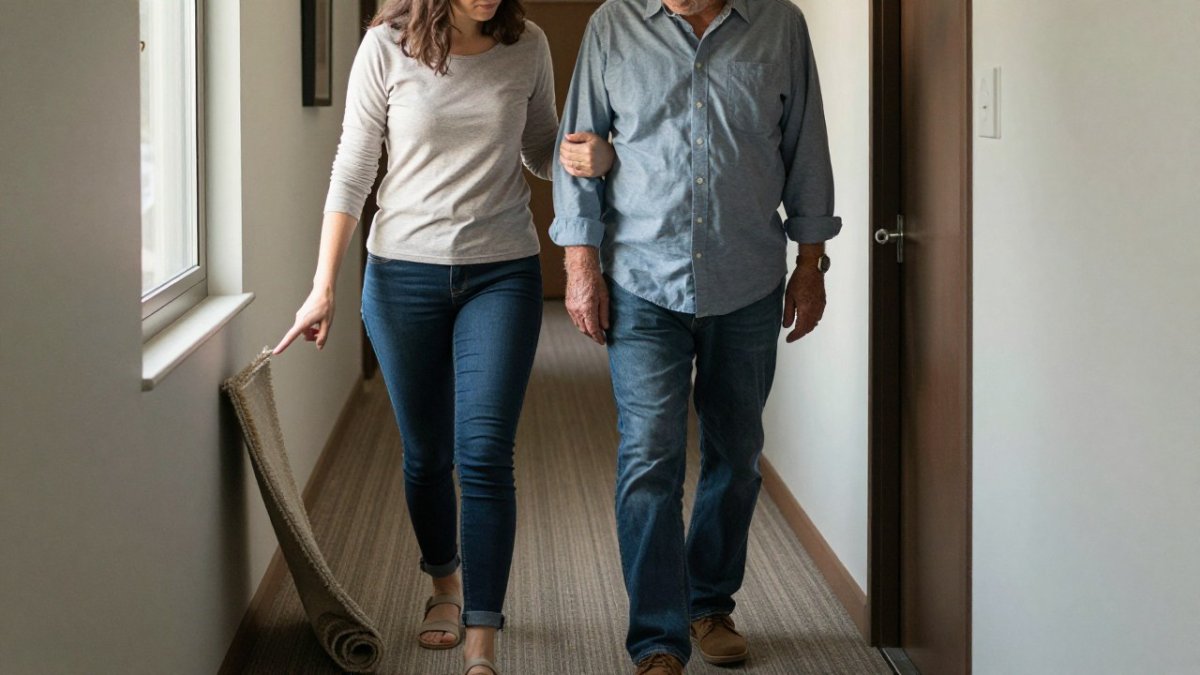
Not every hazard is equal. The same curled rug edge is a minor annoyance for one person and a fracture waiting to happen for another. Rank each item against four filters:
- Fall risk. Does this create a trip, slip, or loss of balance? A loose rug on tile outranks a cluttered shelf every time.
- Mobility. Do you need to bend, reach, twist, or lunge to use this space? The bathroom and stairs demand more mobility than any other rooms.
- Vision. Can you see the hazard in low light, at night, or without your glasses? Poor contrast and dim corners hide hazards.
Score each hazard high, medium, or low on those four filters. Anything high on two or more moves to the top of your list. That is your first weekend of work.
(/prevent-bathroom-falls-seniors/).
Stairs, Handrails, and Step-Free Entry
Stairs deserve full attention because a single misstep there costs more than a misstep anywhere else.
Check these items on every staircase:
- Handrail height and sturdiness
- Good lighting at the top and bottom
- Contrasting tape on the stair edges
Step-free entry matters too. A ramp or a low threshold at the front door keeps you from negotiating a step every time you come home with groceries.
If stairs or entry barriers are the sticking point, look at stair chair lifts, ramps, and small home elevators to see what actually solves the problem.
Aging in Place Home Modifications That Actually Pay Off
The modifications that pay off are the ones you will use every single day. Fancy upgrades that sit unused are just expensive furniture.
Rank your projects by how often you touch them and how much risk they remove:
| Modification | Where It Helps | Priority |
|---|---|---|
| Grab bars and blocking | Bathroom, shower, toilet | High |
| Better lighting and night-lights | Hallways, stairs, bedroom path | High |
| Handrails on both sides | Stairs, steps, porch | High |
| Nonslip flooring and mats | Bathroom, kitchen | Medium |
| Step-free entry or ramp | Front door, garage | Medium |
| Accessible bathing fixture | Bathroom | Depends on mobility |
Low-Cost Fixes vs. Larger Renovations
Most guides lump every modification into one bucket. That is a mistake, because the money and the disruption are wildly different.
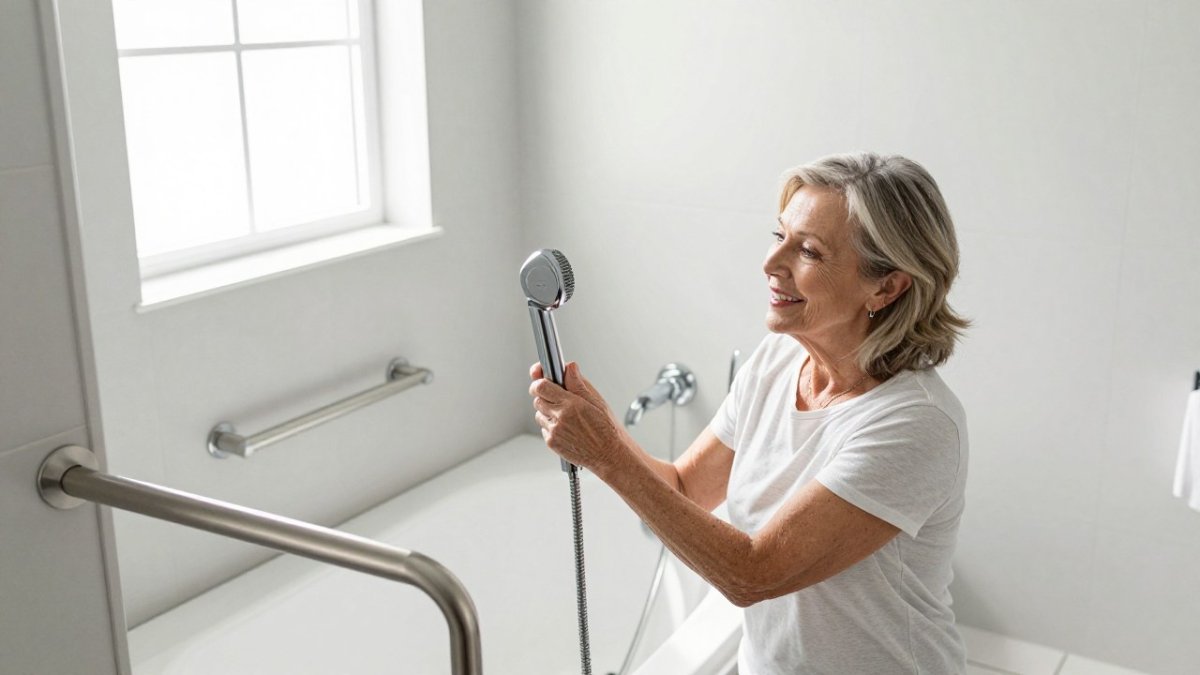
Mid-range projects need a handyman or contractor but not a full remodel: anchoring grab bars into studs, adding a second handrail, improving task lighting, installing a shower chair and a handheld showerhead.
Larger renovations change the structure or fixtures: a step-free entry, a roll-in shower, a walk-in tub, widened doorways.
How to Find and Vet a Qualified Professional
This is the part the brochures skip, and it is where most of the costly mistakes happen.
Start with an occupational therapist when you are unsure what you need. An OT assesses how you actually function at home and can recommend specific modifications rather than a wish list.
Questions to ask before you sign anything:
- Is the estimate written, itemized, and clear about what is and is not included?
- Who pulls the permits, and who is accountable if the work fails inspection?
- Is the installer an employee or a subcontractor, and who services the product after installation?
If you already have an estimate in hand, a second opinion costs you nothing but a phone call and is worth every minute.
Funding and Prioritizing When the Budget Is Tight
Not everyone can do the whole list at once, and nobody should feel bad about that.
A practical order for most households:
- The cheap fixes that remove the highest fall risk, done this month
- The bathroom, because it is the most dangerous room and the one you use every day
- Stairs and entryways, because a fall there is the most costly
- Everything else, as budget allows
Ask about funding before you assume you are paying it all yourself.
Verify current eligibility and amounts directly with each program, because rules and funding change.
For a deeper look at which projects deliver real safety value, read what home modifications keep seniors safe.
Real Aging in Place Examples From the Field
Real aging in place examples look less dramatic than the brochures.
One pattern shows up again and again. People wait until something happens. Then they scramble.
That is the whole game. Small, boring, early moves beat dramatic, expensive, late ones.
Aging in Place Home Care: Support Without Giving Up Independence
Aging in place home care is not the same as moving to a facility.
That help comes in layers:
- Family check-ins and shared calendars
- A medical alert system or smartwatch with fall detection
- Motion sensors and smart-home lighting
Caregiver support matters here, too. The person helping you needs rest and backup. A burned-out caregiver helps nobody.
Assistive devices and mobility aids belong in this conversation.
The goal is independent living, not stubborn independence. There is a difference, and it is worth naming out loud.
Plan for Emergencies, Outages, and the Unexpected
Emergencies and outages expose every weak spot in a plan. A power outage kills the lights on the stairs.
Build a simple emergency plan now:
- Keep a charged phone within reach of the bed and the bathroom
- Store a flashlight and a backup battery in each main room
- Write down emergency contacts and keep the list visible
A medical alert system only works if you wear it. The shower is exactly where you need it most, so choose one that tolerates water.
Social connection belongs on this list, too. Isolation is its own hazard. A neighbor who checks on you is a safety feature.
Book a Free Bathing and Home Safety Assessment
The best time to plan for safe aging in place is before you need to. The second-best time is today.
You can also take our free assessment online or call 800-688-0055 to get started.
Here is what I tell every family: you do not have to do everything at once.
Call us at 800-688-0055 or visit BentleyBaths.com for a free evaluation.
Frequently Asked Questions
What is the 40/70 rule for aging and caregiving?
It is a rule of thumb used in caregiving conversations: when you are 40 or your parent is 70, start talking about the future before a crisis forces the issue. The idea is to plan while everyone is calm and options are open. Nothing about it is a legal deadline, and no government program requires it. Treat it as a prompt to discuss where you want to live, who helps with what, and which home modifications matter most, rather than waiting for a fall to start the conversation.
What home modifications help older adults age in place safely?
The highest-value changes usually target the bathroom and the stairs. In the bathroom, that means grab bars anchored into framing, nonslip surfaces, good lighting, a stable seat, and a bathing setup that lets you sit rather than step over a tub wall. On stairs, secure handrails on both sides and adequate lighting matter more than most people expect. Wider doorways, ramps, and improved entry lighting help too. An occupational therapist or age-in-place specialist can help you rank these by your actual needs rather than by sales pitch.
Is aging in place cheaper than assisted living?
Sometimes, but it depends on the modifications your home needs and the care hours you require. Aging in place home care can be purchased by the hour and scaled up or down, while assisted living is usually a recurring monthly cost. The catch is that a home needing major accessibility work can absorb a large upfront investment. Ask for written estimates, compare them against local care costs, and prioritize modifications that reduce fall risk first. A free second opinion on any quote is worth the phone call.
How can I reduce fall risks at home as I age?
Start with the boring stuff: remove loose rugs, clear clutter from walkways, add night-lights along the path to the bathroom, and put a lamp within reach of the bed. Then look at the bathroom, where hard surfaces and wet floors combine badly. Grab bars, nonslip mats, and a seated bathing option reduce the most common trouble spots. Get your vision checked, review medications with your doctor, and consider a physical therapy or occupational therapy assessment. No product prevents every fall, so pair equipment with strength and balance work.


