Table of Contents
- Why I Compare Safe Step Alternatives Before Anything Else
- The Six Safe Step Alternatives at a Glance
- Walk-In Tub Versus Walk-In Shower: The Decision Most People Get Backwards
- Grab Bars and Shower Seating for Seniors: The Cheapest Real Safety Upgrade
- Bath Lifts, Transfer Benches, and Shower Chairs: Low-Cost, High-Impact Options
- Walk-In Tub Installation Considerations Nobody Puts in the Brochure
- Medicare Coverage for Walk-In Tubs and Other Ways to Pay
- Which Alternative Fits Your Mobility Level?
- Frequently Asked Questions
Last Updated: October 21, 2026
Why I Compare Safe Step Alternatives Before Anything Else
I started Bentley Baths in 2003 because my mother fell in a traditional bathtub.
So when someone asks me about safe step alternatives for seniors, I start with a diagnosis, not a catalog.
Here is the uncomfortable truth. A bathroom can look safe and still be dangerous. A towel bar holds towels.
Below I walk you through six real options, the tradeoffs each carries, and who each one genuinely fits.
The Six Safe Step Alternatives at a Glance
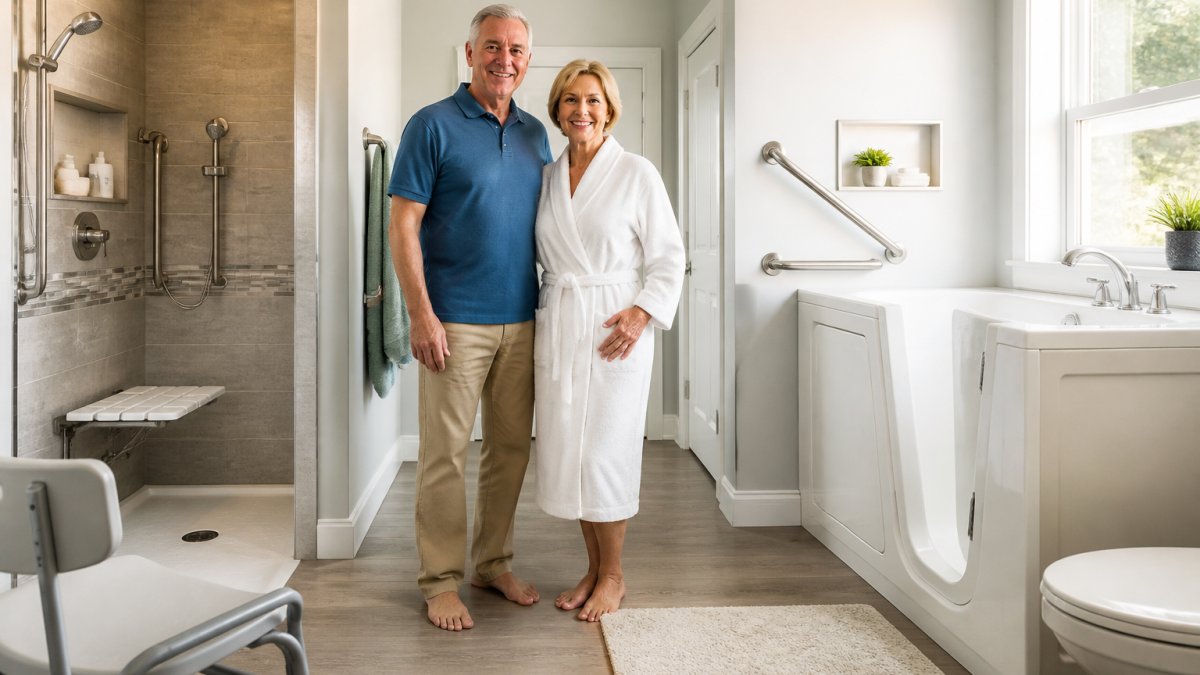
The main safe step alternatives for seniors are walk-in tubs, walk-in showers, curbless showers, grab bars with shower seating, bath lifts and transfer benches, and shower chairs. Each solves a different problem, and picking the wrong one wastes money.
- Walk-in tubs: seated soaking with a watertight door and low step-in height
- Walk-in showers: easy entry with a built-in seat and handheld showerhead
- Curbless showers: the lowest threshold available, best for walkers and wheelchairs
Quick Comparison: Entry, Seating, and Who Each One Fits
| Option | Entry | Seating | Best For |
|---|---|---|---|
| Walk-in tub | Low step-in, watertight door | Built-in seat | Soaking, arthritis, cold-climate bathers |
| Walk-in shower | Low threshold | Built-in or fold-down seat | Daily showering, shared households |
| Curbless shower | Near-flush floor | Fixed or movable seat | Walkers, wheelchairs, caregiver help |
| Grab bars and seating | No change to tub | Shower chair or bench | Early balance changes, tight budgets |
| Bath lift or transfer bench | Mechanical or slide | Built in | Limited standing tolerance |
| Shower chair | None | Seated | Mild mobility limitations |
Walk-In Tub Versus Walk-In Shower: The Decision Most People Get Backwards
Most people decide on the fixture first and the mobility need second. That is backwards, and it is expensive.
A walk-in tub is a bathtub you step into through a door, with a built-in seat and a low threshold.
My honest take: if soaking is part of your life and your joints miss warm water, a walk-in tub earns its place.
Ask yourself one question before you compare prices: do you want to sit in water, or stand under it? Answer that honestly and half the decision is made.
Grab Bars and Shower Seating for Seniors: The Cheapest Real Safety Upgrade
If money is tight, start here. Grab bars and shower seating for seniors deliver the most safety per dollar of anything in the bathroom.

A properly anchored grab bar gives your hand something that actually holds.
The catch is installation. A grab bar is only as good as what it is screwed into. Towel bars and drywall anchors fail.
The CDC guidance on falls among older adults is blunt about why this matters: falls are a leading cause of injury for older adults, and most happen at home.
Never let anyone install a grab bar into drywall alone. It will feel solid in the showroom and pull out the first time you actually need it.
Bath Lifts, Transfer Benches, and Shower Chairs: Low-Cost, High-Impact Options
Not everyone needs construction. Bath lifts, transfer benches, and shower chairs solve the getting-in-and-out problem for far less than a renovation.
- Bath lift: a powered seat that lowers you into and out of the tub
- Transfer bench: a bench that straddles the tub wall so you sit and slide across
- Shower chair: a simple seated option for the shower
These are reversible, rental-friendly, and easy to remove if your needs change.
The limits are honest ones. A bath lift still requires you to sit down and stand up at tub height.
A common mistake is buying the cheapest shower chair and discovering it slides.
Walk-In Tub Installation Considerations Nobody Puts in the Brochure
Walk-in tub installation considerations start with the room, not the tub. Most brochures show a beautiful bathroom. Few show the doorway the tub has to come through, the water heater in the basement, or the floor joists under the tile. Those three details decide more projects than price ever does.
Let me walk you through what actually happens, in the order it happens, because the order matters.
Step One: Can the Tub Get In the Door?
A walk-in tub is a large, heavy, rigid object. It has to pass through your front door, down or up a hallway, around corners, and through the bathroom doorway.
This is the first thing I check on an in-home evaluation, and the thing most salespeople skip because it complicates the sale. If the tub cannot physically reach the bathroom, the project changes scope before anyone talks about features.
Step Two: What Is Under the Floor?
A filled walk-in tub is heavy. Water weighs roughly 8 pounds per gallon, and a deep soaking tub holds a lot of it, plus the tub itself and the person in it. Older floors were not always framed for that concentrated load.
I am not going to give you a load calculation in an article. I am going to tell you to ask the question.
Step Three: Plumbing and Drainage
The drain and supply lines have to line up with the new tub, or they have to be moved. Moving a drain is real work. It affects the floor, the ceiling below, and sometimes the wall.
Drain speed matters too. Walk-in tubs drain slowly by design because the door has to seal before water can be released. That is a tradeoff, not a defect.
Step Four: The Water Heater
Filling a deep tub takes hot water. An aging water heater may not keep up, and the last thing you want is a lukewarm soak in an expensive fixture. Ask the installer to check the heater’s capacity and recovery rate against the tub’s fill volume. Sometimes the honest answer is that the water heater needs attention before the tub makes sense.
Step Five: Electrical
Therapy jets, heated seats, and built-in lights need a circuit. That means an electrician, a permit in most jurisdictions, and a real line item in the scope. If a quote does not mention electrical, ask why. Either the tub does not have those features, or someone is planning to improvise. Improvising electrical in a wet room is how people get hurt.
Step Six: The Disruption Question
A walk-in tub project usually means at least a day or more of work, a period without that bathroom, and a crew in your house. Ask who does the work. Are they employees or subcontractors? Who is accountable if something goes wrong? What does the warranty cover, and for how long? Get the scope in writing, including what is not included.
If the quote does not list electrical, plumbing relocation, floor repair, and cleanup as separate line items, you do not have a quote. You have a number. Those are the four places surprise costs hide.
How to Verify a Contractor Before You Sign
This is where my legal background earns its keep. Before you sign anything, do these things:
- Check the license. Most states require a contractor license for this work. Ask for the number and verify it with the state licensing board, not the company’s own website.
- Ask for the certificate of insurance. General liability and workers’ compensation. If a worker is injured in your home and the company is not covered, that is your problem.
- Get the permit question answered. Who pulls the permit? A company that asks you to pull your own permit is telling you something.
At Bentley Baths, we start every project with a free in-home evaluation by an age-in-place specialist. Not as a sales tactic, but because I have watched too many people buy the wrong tub for the wrong room. The evaluation is where the doorway, the floor, the plumbing, and the water heater get honest answers before anyone signs anything.
Measure the doorway and the water heater before you fall in love with a tub. Those two details sink more projects than price ever does.
Medicare Coverage for Walk-In Tubs and Other Ways to Pay
Medicare coverage for walk-in tubs is one of the most misunderstood topics in this business.
There are narrow exceptions.
Medicare’s official coverage information is the source to check, and I mean the actual site, not a brochure with a flag on it.
Other ways people pay:
- Medicaid waivers: some state programs fund home modifications for eligible participants
- Veterans benefits: VA programs may assist with accessibility modifications for eligible veterans
- State and local programs: many areas offer home modification help for older residents
I will not quote you a benefit amount, because eligibility rules change and I am not your tax advisor.
If a salesperson promises you that insurance will cover your tub, get that in writing with a policy number attached. Verbal promises about coverage are worth exactly what you paid for them.
Which Alternative Fits Your Mobility Level?
Most articles hand you a list and wish you luck. I would rather hand you a decision. Let me show you how I actually walk a family through this, because the answer changes depending on three things: your balance, your ability to transfer, and whether anyone else is helping you bathe.
Here is the framework I use. Answer these four questions honestly, and the right option usually picks itself.
- Can you stand on one leg for a few seconds without holding anything? If no, you are a seated bather, full stop. That rules out anything that requires standing balance in a wet tub.
- Can you sit down and stand up from a standard chair without using your arms? If no, you need a seat height and a support point designed for you, not a low tub rim.
- Do you need a caregiver in the room with you? If yes, the fixture has to fit two people, and that changes everything.
- Is soaking part of your life, or do you just want to get clean? This is the question people skip, and it is the one that decides between a tub and a shower.
The Decision Matrix I Use
| Your situation | First choice | Backup option | What to avoid |
|---|---|---|---|
| Mild balance changes, still stands comfortably | Grab bars, shower chair, handheld showerhead, better lighting | Low-threshold shower with fold-down seat | High tub walls, glass doors that block reach |
| Trouble standing for long, or standing up from a low tub | Walk-in shower with built-in seat | Walk-in tub if soaking matters | Standard tub with a bath mat and hope |
| Uses a walker or wheelchair, or needs caregiver help | Curbless shower with fixed seat and room for a second person | Roll-in shower | Any fixture with a threshold you have to step over |
| Severe arthritis or chronic pain | Walk-in tub with seated soaking and therapeutic features | Walk-in shower with a heated seat | Anything that requires lowering yourself onto a low surface |
| Rental home or tight budget | Transfer bench, bath lift, shower chair | Grab bars with landlord permission | Permanent construction you cannot take with you |
The Caregiver Dimension Nobody Talks About
If a spouse or adult child is helping with bathing, the bathroom has to work for two bodies. That means room to stand beside the seat, a handheld showerhead on a long hose, and a seat rated for the bather’s weight with space to pivot.
I have told more than one family that a curbless shower was the honest answer even though a tub would have been the bigger sale. That is the job. Diagnosis before purchase.
A Note on Walkers and Wheelchairs
If a walker or wheelchair is in the picture, measure the doorway before you fall in love with any fixture. A curbless shower only helps if the chair can get to it.
National Institute on Aging guidance on preventing falls makes the point I make to every family: home modifications are one of the few things you can actually control. You cannot control luck.
Match the fixture to the limitation, not to the brochure. If you cannot stand on one leg in the kitchen, do not plan to stand on one leg in a wet tub.
Frequently Asked Questions
Will Medicare pay for a walk-in tub?
Original Medicare generally does not cover a walk-in tub, because it is classified as home modification equipment rather than durable medical equipment. Some Medicare Advantage plans may offer limited flexibility, and you should check your specific plan documents. Medicaid waivers, VA benefits for eligible veterans, and state or local home modification programs sometimes help. Get any coverage answer in writing before you sign a contract, and confirm details with your plan or a benefits counselor rather than a salesperson.
Is a walk-in shower safer than a walk-in tub?
It depends on how you transfer and how steady you are on your feet. A curbless walk-in shower with a built-in seat, grab bars, and a handheld showerhead removes the step-over entirely, which suits walker and wheelchair users well. A walk-in tub offers seated soaking and therapy jets but requires you to stand and pivot over a door threshold. In my experience, the safer option is the one that matches your actual balance and transfer ability today, not the one that sounds most protective.
What are the alternatives to a Safe Step walk-in tub?
The main safe step alternatives for seniors are walk-in showers, curbless or low-threshold showers, transfer tubs, bath lifts used with an existing tub, transfer benches, shower chairs, and simple grab bar and seating upgrades. Each solves a different problem. A bath lift or shower chair costs far less and works well for mild balance issues. A walk-in tub or curbless shower makes more sense when getting over a tub wall has become genuinely risky.
How long do walk-in tubs take to fill and drain?
Faster than most people expect, but not instant. Fill and drain times depend on your water pressure, the tub’s capacity, and the drain size. A larger tub with a standard drain can take several minutes each way, and you generally stay seated inside until the water drains. Ask the company to demonstrate fill and drain on the exact model you are buying, and ask what drain upgrade they recommend for your plumbing.