Skip to content

Last Updated: October 24, 2026
Quick Summary
A walk in tub is worth the cost if you want to soak and struggle with the step over a standard rim, since the watertight door removes that swing over the side. It is not worth it if you only shower quickly, your bathroom is too small, or your mobility needs a roll-in shower instead.
- Measure the alcove, the path in, the door swing, the floor, the drain, the water heater and the electrical service before you sign anything.
- Most walk-in tubs are built around 60 inches long and 30 to 32 inches wide, though compact and wider models vary.
- Plan on several minutes to fill and several minutes to drain, and you sit inside the whole time.
- Seat height, door latch operation, grab bar placement and clear floor space matter more than the number of jets.
- The FTC Cooling-Off Rule gives buyers three business days to cancel certain contracts signed at home, but only qualifying transactions.
Table of Contents
- What a Walk-In Tub Actually Solves
- Walk-In Tub vs Walk-In Shower: Which Fits Your Bathing Habits?
- Walk-In Tub Dimensions and What Your Bathroom Can Hold
- Walk-In Tub Fill and Drain Time: The Daily Reality
- Walk-In Tub Installation Requirements and True Scope
- Safety Features, Comfort, and Hydrotherapy Options Compared
- What to Check Before You Sign: Warranty, Service, and Total Cost
- Schedule Your Free Walk-In Tub Buying Review With George
- Frequently Asked Questions
What a Walk-In Tub Actually Solves
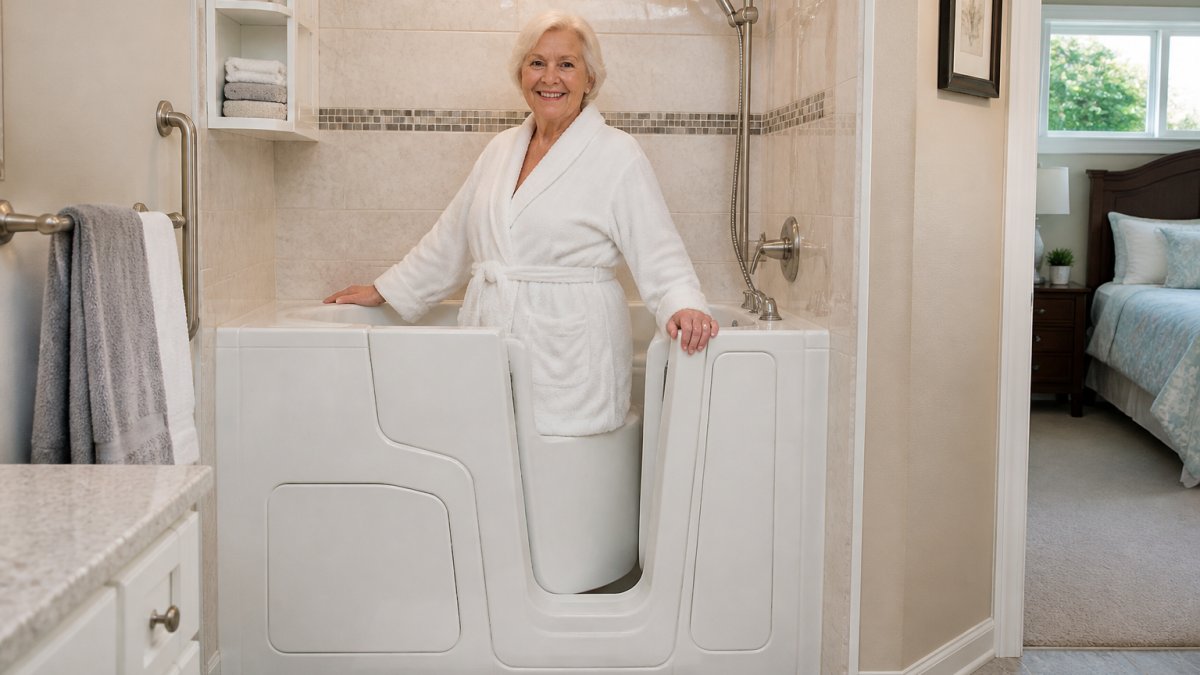
Here’s the question I hear most often at the kitchen table: “George, is this thing really worth what it costs?” Fair question. A walk in bathroom tub is a bathtub with a watertight door you step through rather than a wall you climb over, built so you can sit down, soak, and get out without lifting your leg over a rim. That single change solves the problem most bathing injuries start with: the swing over the side.
I founded this company in 2003 after my own mother had a serious bathtub accident, so I don’t come at this as a salesman. I come at it as a son who got the call.
What a walk-in tub does not solve: balance, judgment, or a bathroom that’s too small. Those need honest assessment.
Walk-In Tub vs Walk-In Shower: Which Fits Your Bathing Habits?
The walk in tub vs walk in shower decision comes down to one habit: do you want to soak, or do you only want to wash? A walk-in shower wins on speed, space, and cleanup. A walk-in tub wins on immersion, warmth, and seated bathing.
Ask yourself three things:
- Do you miss a long soak, or do you just want to get clean fast?
- Can you sit down and stand up from a low seat without help?
- Does your bathroom have room for a tub footprint, or only a shower stall?
Best for: anyone who wants deep warmth and seated soaking. Skip if: you shower in five minutes and never fill a tub.
Walk-In Tub Dimensions and What Your Bathroom Can Hold
Most walk-in tubs are built to fit a standard alcove, commonly around 60 inches long and 30 to 32 inches wide, though sizes vary by model.
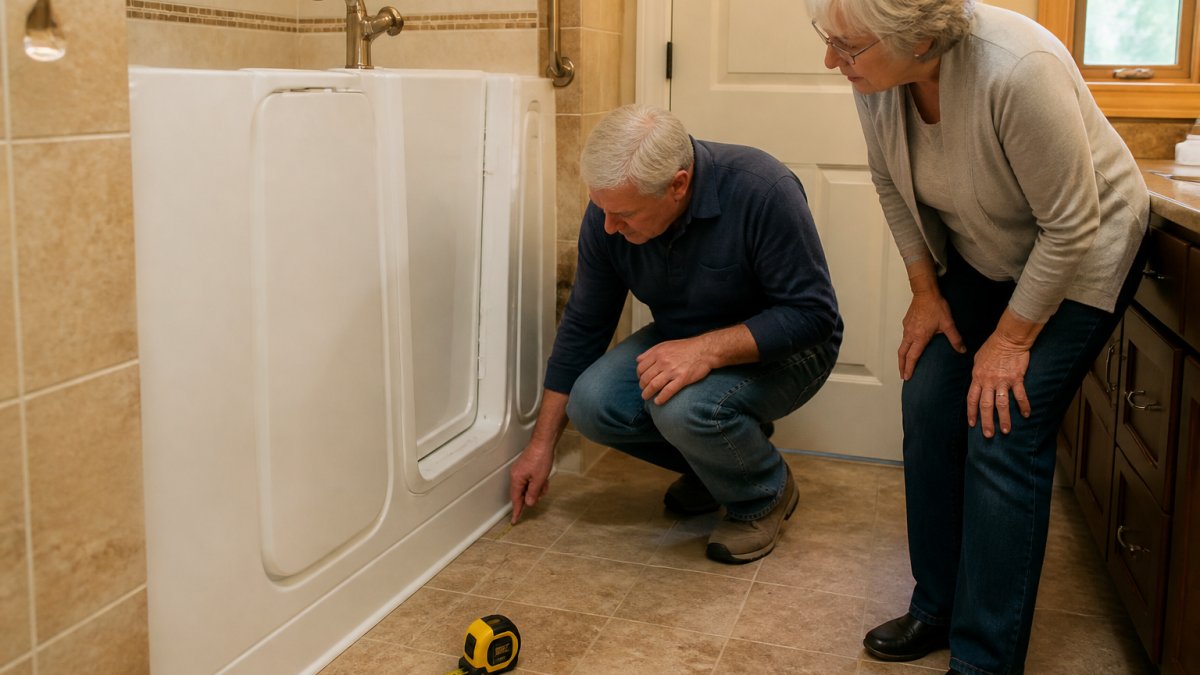
Here is the measurement checklist I walk through before anyone falls in love with a picture in a brochure. Grab a tape measure and a notepad.
1. The alcove opening. Measure length, width, and height at the studs, not at the old tub’s trim.
2. The path in. Measure every doorway between the front door and the bathroom: width, height, and any turn radius in a hallway or stairwell.
**3.
4. Floor support. A filled walk-in tub weighs considerably more than a standard tub because it holds more water and often adds a seat, jets, and a heater.
5. Drain location. The drain has to line up with, or be reworked to meet, the existing drain line.
6. Water heater capacity. A walk-in tub holds more water than a standard tub, and you sit inside while it fills.
7. Electrical service. Jets, lights, heaters, and some door-latch systems need power. Confirm whether there is a circuit available near the tub or whether one has to be added.
A cramped bathroom isn’t a dead end. It’s a design problem. If your space is tight, read our guide on walk-in tubs for small bathrooms before you measure anything.
One more honest note: a walk-in tub is not the only answer for a tight or awkward bathroom. A roll-in shower, a transition tub, or a tub cut may fit where a full walk-in tub will not. The right move is to measure first, then compare options against your actual space and your actual mobility, not against a showroom photo.
Walk-In Tub Fill and Drain Time: The Daily Reality
Fill and drain time is the honest drawback nobody puts in the brochure. A walk-in tub holds more water than a standard tub, and the door seal means you sit inside while it fills and while it drains. Plan on several minutes each way, and know that your water heater’s capacity matters more than the tub’s. If you are wondering will I freeze while waiting for my Bentley walk-in tub to fill and drain, we answer that question directly.
Two practical fixes: warm the bathroom first, and run the hot water at the temperature you actually want.
Walk-In Tub Installation Requirements and True Scope
Installation is where budgets quietly grow. A walk-in tub project typically involves removing the old tub, checking floor support, running the drain correctly, and often adding electrical service for jets, lights, or a heater. It is not a drop-in swap.
Get a written estimate that lists every line: removal, disposal, framing, plumbing, electrical, finish work, and permit handling. For a realistic picture of what the project involves, see our walk-in tub installation cost breakdown.
Watch out: a verbal quote that skips electrical and disposal is not a quote. It’s an opening bid.
Safety Features, Comfort, and Hydrotherapy Options Compared
Safety is a list, not a single feature, and the list has to be matched to your body, not to a brochure. The door seal has to be watertight and easy to latch. The floor should be slip-resistant. Grab bars belong where your hands actually reach, and the built-in seat height should let your feet rest flat on the tub floor rather than dangle.
Here is the comparison framework I use, with the questions that actually matter.
| Feature | What It Does | What to Ask |
|---|---|---|
| Low threshold | Reduces the step-over | How low is it, and is there a ramp or transfer aid option? |
| Watertight door | Seals the opening | How does the latch work, and can you operate it seated? |
| Built-in seat | Lets you sit to bathe | Is the seat height right for your leg length, and is it contoured? |
| Grab bars | Gives a handhold | Are they placed where you reach, and rated for your weight? |
| Air jets | Gentle bubbles | Can intensity be adjusted, and how is the air line kept clean? |
| Water jets | Targeted massage | Are they directional or fixed, and what maintenance do they need? |
| Hand shower | Rinsing and seated showering | Does it reach the seat, and is there a diverter? |
| Heater or warm-air option | Keeps water and air warm | How much power does it draw, and what does it add to the electrical scope? |
Now the part competitors tend to skip: user fit. A walk-in tub is not automatically the right choice for every mobility need. If you cannot stand and pivot safely, or if you need a caregiver to help you transfer, the door width, the seat height, and the clear floor space in front of the tub all matter more than the jet count. Some people do better with a roll-in shower and a shower chair. Some do better with a transition tub.
On hydrotherapy, I’ll be blunt: warm water and gentle movement can feel genuinely good for aching joints. That is comfort, not a cure. Anyone promising a walk-in tub treats arthritis is selling, not teaching. My own approach, which I call Medical Hydrotherapy, is temperature-appropriate, sanitary, and non-aggressive: whole-body thermal and mechanical water effects. There is a real difference between broad, gentle warmth and a high-pressure jet you have to brace against. Ask which one you are buying.
One more trade-off worth naming: jets and heaters add maintenance and electrical scope. A simpler tub with a good seat, a low threshold, and a hand shower may serve you better than a complex one you have to service. That is not a knock on features. It is a reminder that every feature has a cost, and the cost is not only money.
What to Check Before You Sign: Warranty, Service, and Total Cost
Total cost of ownership is the number that matters, and it’s never just the tub. Add the tub, the installation scope, any electrical work, the warranty terms, and who answers the phone in year five.
Before you sign, confirm:
- The warranty in writing, including what voids it
- Who performs service and how fast they respond
- Whether the estimate is fixed or “subject to change”
- Financing terms in plain numbers
- Cancellation language, and your rights if you signed at home
That last item matters. The FTC Cooling-Off Rule gives buyers three business days to cancel certain contracts signed at home, but only qualifying transactions. Check the official guidance the same day you sign, not next week.
For broader consumer protection context, the FTC’s consumer advice on home improvement scams is worth ten minutes of your evening.
Schedule Your Free Walk-In Tub Buying Review With George
Here’s my challenge to you: before you spend a dime, get one honest conversation with someone who isn’t paid on commission pressure. At Bentley Baths, we offer a free in-home or virtual evaluation by an age-in-place specialist, and we’ll review any estimate you already have, including one from another company. You can also get your free walk-in tub buyer’s guide to prepare for the conversation. We carry walk-in tubs, ADA-compliant shower systems, and slide-in models, and we’ll tell you plainly if a tub isn’t your answer.
Call 800-688-0055 and let’s talk it through.
Frequently Asked Questions
How long does a walk-in tub take to fill and drain?
Most walk-in tubs fill in roughly 8 to 15 minutes and drain in about 2 to 5 minutes, depending on the tub’s capacity, your water pressure, and the drain assembly. Dual drains and a larger outflow speed emptying. Because you sit inside while it fills and drains, budget 20 to 30 minutes for a full bath. Ask for the manufacturer’s stated fill and drain figures in writing, and confirm your water heater can supply enough hot water for a full tub.
What are the typical dimensions of a walk-in tub, and will one fit my bathroom?
Many walk-in tubs are about 60 inches long and 30 to 32 inches wide, similar to a standard alcove tub, though models vary. Measure your doorway, turning space, and the alcove itself before shopping. A free in-home evaluation is the surest way to confirm bathroom fit, because door swing, floor platform, and drain location all affect whether a tub works in your space.
Is a walk-in tub or an accessible shower better for everyday bathing?
It depends on how you bathe. A walk-in shower suits people who mainly shower and want the lowest possible threshold and fastest daily routine. A walk-in tub supports both seated showering and full-body soaking, which a shower cannot provide. If you want deep immersion for aching joints, a tub has the edge. If speed and minimal entry matter most, a shower may fit better. An occupational therapy or age-in-place assessment can help you decide.
What should I check before choosing a walk-in tub for my bathroom?
Confirm the written estimate covers the full scope: removal, plumbing and electrical work, the floor platform, and cleanup. Verify the warranty terms, who handles service, and the cancellation language. Check the door seal, built-in seat height, grab bars, slip-resistant floor, and drain location. Ask how fill and drain time fits your routine. Get the specifications in writing, and consider a second opinion before signing anything.
A walk in bathroom tub is worth the cost when it fits your body, your bathroom, and your habits, and it’s a costly mistake when it doesn’t. Get the assessment first. Get started with Bentley Baths and make the decision with clear eyes instead of a sales pitch in your ear.