 Skip to content

Quick Summary
A home safety evaluation is a walk-through of your house by a trained evaluator who looks for hazards that could cause a fall or injury. Good evaluations cover movement paths, fixtures and surfaces, and lighting, and they end with a prioritized list of recommendations.
- Ask whether the evaluator holds a verifiable license or certification, and check it with the issuing organization.
- Look for a written report with recommendations ranked by urgency and cost.
- Have the person who lives in the house walk the route they use every day during the visit.
- Ask whether the visit is billable to health insurance, free through an Area Agency on Aging, or a flat private fee.
- Start with the low-cost fixes this week, such as night lighting and securing grab bars into studs.
Table of Contents
- What a Home Safety Evaluation Actually Covers
- Who Conducts Home Safety Assessments and Their Qualifications
- How to Find and Vet a Local Evaluator
- Room-by-Room Checklist: Where the Bathroom Fits In
- Costs, Insurance Coverage, and Free Options
- Preparing for the Visit and What Happens Afterward
- Booking Your Local Evaluation Next
- Frequently Asked Questions
How to Find a Local Home Safety Evaluation That Works
Last Updated: November 11, 2026
What a Home Safety Evaluation Actually Covers
A home safety evaluation is a walk-through of your house by a trained person who looks for hazards that could cause a fall or injury. The bathroom is usually the riskiest room, but the evaluator also checks walkways, stairs, entrances, and lighting. Many families expect a quick glance. A proper find local home safety evaluation takes longer and looks at how a person actually moves through the house.
Good evaluations focus on three areas:
- Movement paths: Clear routes between the bed, bathroom, kitchen, and front door
- Fixtures and surfaces: Grab bars, handrails, flooring, and tub or shower entry height
- Lighting and layout: Night lights, switch locations, and clutter that creates trip hazards
The goal is a prioritized list, not a long list of everything wrong with the house. Ask for recommendations ranked by urgency and cost.
Who Conducts Home Safety Assessments and Their Qualifications
Evaluators come from different backgrounds. Occupational therapists and physical therapists often have clinical training in mobility and fall risk. Some certified aging-in-place specialists have construction or remodeling backgrounds. Others come from home health or senior care.
Each type brings something different. Clinical staff understand how a condition affects balance and movement. Remodeling specialists know which fixes are practical and what they cost. Many good evaluations combine both views.
Before you book, ask:
- What training or certification does the evaluator hold?
- Do you work with a licensed clinician when medical needs are involved?
- Will you provide a written report with prioritized recommendations?
Check any credential you’re told about with the issuing organization. Don’t rely on a title alone.
How to Find and Vet a Local Evaluator
Start with referrals from your doctor, local Area Agency on Aging, or occupational therapy practice. These sources often know who does careful work. Online directories help too, but read reviews critically and confirm the provider’s license or certification directly.
When comparing providers, use this checklist:
- Verifiable credential (license or certification)
- Clear explanation of what the visit includes
- Written report delivered after the visit
- Transparent pricing or a clear statement that the visit is free
- Willingness to answer questions before you commit
Be cautious of anyone who pressures you to buy equipment during the first visit. A good evaluator recommends options and lets you decide. If you’re weighing bathroom equipment, Bentley Baths offers a free Walk-In Tub Buying Review with George at https://bentleybaths.netlify.app/.
Room-by-Room Checklist: Where the Bathroom Fits In
Work through the house in order of daily use. Start at the bed, then the bathroom, hallways, stairs, kitchen, and entrances. The bathroom deserves special attention because wet floors and hard surfaces make falls more likely and more serious.

Bathroom Safety Assessment for Seniors
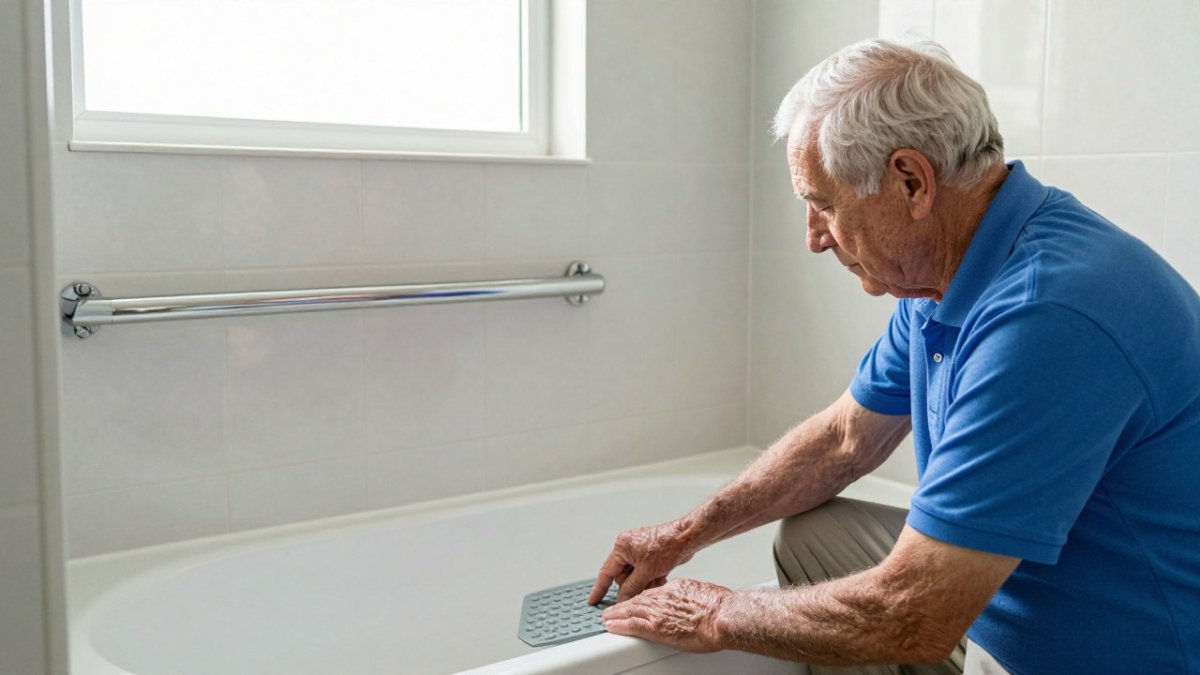
A bathroom safety assessment looks at how a person gets in and out of the tub or shower, stands on wet floors, and reaches the toilet and sink. Common issues include a high tub edge, missing grab bars, and slippery flooring. Sit down before you judge the space, and watch how someone steps over the threshold. You may find that the room looks fine but the entry is the problem.
Other items to check in the bathroom:
- Grab bars anchored into studs, not just suction cups
- Non-slip mats or textured flooring
- Night lighting between the bed and bathroom
- Handheld shower heads and shower seats where appropriate
Costs, Insurance Coverage, and Free Options
Most people ask about cost before they ask what the evaluator will actually look at, and that is backwards. Price depends on who does the visit and whether the visit is billed as a medical service or as a private consultation. Those two paths can produce very different bills, so sort out which one you’re on before you book.
Here is how the common paths usually break down:
- Occupational or physical therapy evaluation: If a licensed therapist does the visit as part of a treatment plan, it may be billed to your health insurance. Ask the office whether the home visit is covered, whether it requires a physician’s order, and whether it counts toward your deductible.
- Area Agency on Aging referral: Many local agencies offer home assessments at no charge or on a sliding scale, especially for people with limited income. Ask whether the assessment is tied to a funded program and what eligibility rules apply. Verify these details directly with the agency, because rules vary by county and state.
- Private evaluator: A certified aging-in-place specialist or a remodeling professional may charge a flat fee for the visit and the written report. Get the fee and what it includes in writing before the visit. Ask whether the fee is credited toward any work you later hire them to do.
- Manufacturer or retailer visit: Some companies offer no-charge in-home reviews. These are sales visits, so treat the recommendations as one input and get a second opinion before spending money.
Insurance questions to ask before you assume anything is covered:
- Is the home visit itself billable, or only the treatment sessions?
- Does the plan cover home modifications such as grab bars or a bathroom remodel, or only durable medical equipment?
- Does my plan or a state program have a waiver or home-and-community-based service option that pays for some modifications?
- What documentation do you need from my physician to support a claim?
Modifications are usually paid out of pocket, though some state Medicaid waivers and local housing or weatherization programs help with specific repairs. Check eligibility with the program itself, not a third-party website. Watch out: a free evaluation that ends with a request to sign a contract on the spot is a sales pitch, not a no-cost service. Ask for the written report first and decide later.
The main cost paths are easier to compare side by side.
| Path | Typical cost | What to confirm |
|---|---|---|
| Occupational or physical therapy evaluation | May be billed to health insurance | Whether a physician’s order is required |
| Area Agency on Aging referral | Free or sliding scale | Eligibility rules, verified with the agency |
| Private evaluator | Flat fee for visit and report | Fee in writing; whether credited to later work |
| Manufacturer or retailer visit | No charge, but a sales visit | Get a second opinion before spending |
Preparing for the Visit and What Happens Afterward
The visit goes much better when the person who lives in the house is in the room. That sounds obvious, but many evaluations happen while the resident is in another room or the family member is doing all the talking. Ask the person being evaluated to walk the route they use every day, because the evaluator needs to see how that person actually moves, not how a family member thinks they move.
Before the visit, gather the following:
- A list of recent falls and near-falls, including where they happened and what the person was doing
- Medications that can cause dizziness, unsteadiness, or confusion, and the times they are taken
- Daily routines that worry you most, such as night trips to the bathroom or getting in and out of the tub
- Any existing equipment, such as a walker, cane, or shower chair, and whether it is used consistently
- A rough sense of your goals: staying in the house, avoiding a move, or keeping a caregiver’s workload manageable
Clear the paths the evaluator will walk, especially hallways, the bathroom doorway, and the stairs. Turn on every light. Notice where the light is poor, because that becomes a finding. If the person has vision or hearing limits, make sure glasses and hearing aids are on hand.
During the visit, speak up when something feels unsafe to you. Ask the evaluator to demonstrate their reasoning, such as why a grab bar should go in one place and not another. Ask what they would fix first if the budget were limited.
After the visit, expect a written report. If you don’t get one, ask for it. Sort the recommendations into three groups:
- Fix now: Low-cost, high-impact items such as night lighting, removing loose rugs, and securing grab bars into studs.
- Fix soon: Changes that need a contractor or a few weeks, such as adding a handrail or replacing a slippery floor surface.
- Consider later: Larger projects that depend on how needs change, such as a bathroom remodel or a tub modification.
Start with group one this week. Put the second group on a calendar with a target date. Revisit the third group once the first two are done, because the results often change what you actually need. Watch out: a recommendation to install equipment before anyone has checked whether the person can use it safely is a reason to pause and ask for a second opinion.
Booking Your Local Evaluation Next
Start by listing your top two concerns, such as the tub, the stairs, or night trips to the bathroom. Then contact two or three local providers and ask how their visits work. Bentley Baths offers a free in-home or virtual evaluation to identify safety liabilities in the bathroom and the wider home, including stair lifts and wheelchair ramps. You can schedule your evaluation at https://bentleybaths.netlify.app/ or call 800-688-0055.
Frequently Asked Questions
Who performs a home safety evaluation?
Home safety evaluations are often performed by occupational therapists or physical therapists, who are trained to assess how a person moves through their home. Some aging-in-place specialists, certified home modification professionals, and home health agencies also offer assessments. Ask any provider about their licensing, certifications, and experience with older adults before scheduling. Confirm credentials with the issuing board or certifying body rather than relying on the provider’s own description alone.
Does Medicare cover a home safety evaluation?
Coverage depends on your specific plan, your health status, and whether the evaluation is ordered as part of a covered service such as home health care. Original Medicare does not generally pay for a general home safety evaluation on its own. Contact your plan or Medicare directly and ask which provider types and services are covered before booking.
What should I prepare before a home safety assessment?
Make a list of any falls, near-falls, or areas where you feel unsteady, including the bathroom, stairs, and entrances. Gather information about medications and any mobility aids you use. Clear walkways and good lighting so the evaluator can see the actual conditions you live with. Have a family member or friend present if that helps you remember questions and recommendations.


