Skip to content

Last Updated: November 10, 2026
Quick Summary
The most affordable bathroom modifications for seniors start with cheap fixes that cut fall risk: grab bars mounted into studs, non-slip mats, better lighting and items moved to waist height. Most people can handle these in an afternoon without a contractor. Move up to larger changes only when the cheap fixes are not enough.
- Mount grab bars into wall studs or solid blocking, never drywall anchors.
- Suction-cup grab bars should not be relied on for anything you need to hold.
- Add non-slip mats both inside and outside the tub or shower.
- Replace a bath mat when its suction weakens or its surface wears smooth.
- Ask any grant program for its eligibility rules, cap and waiting list in writing.
Table of Contents
- Why the Bathroom Is Where Most Home Falls Happen
- Start With the Cheapest Fixes That Cut Fall Risk
- Shower Seats, Handheld Heads and Easier Controls: Mid-Range Upgrades
- Walk-In Tubs, Tub Cuts and Roll-In Showers: Costs and Tradeoffs
- Senior Bathroom Remodel Grants and How to Look for Them
- Low-Cost Bathroom Accessibility Upgrades You Can Do This Month
- Book a Bathing Assessment Before You Spend a Dollar
- Frequently Asked Questions
Why the Bathroom Is Where Most Home Falls Happen
Bathrooms cause more serious falls at home than almost any other room.
Most people wait until something happens before they think about it. That’s the wrong order.
The good news: you do not need to remodel to get safer. Start with the cheap fixes and move up only when you need to.
Start With the Cheapest Fixes That Cut Fall Risk
Cheap fixes to do first:
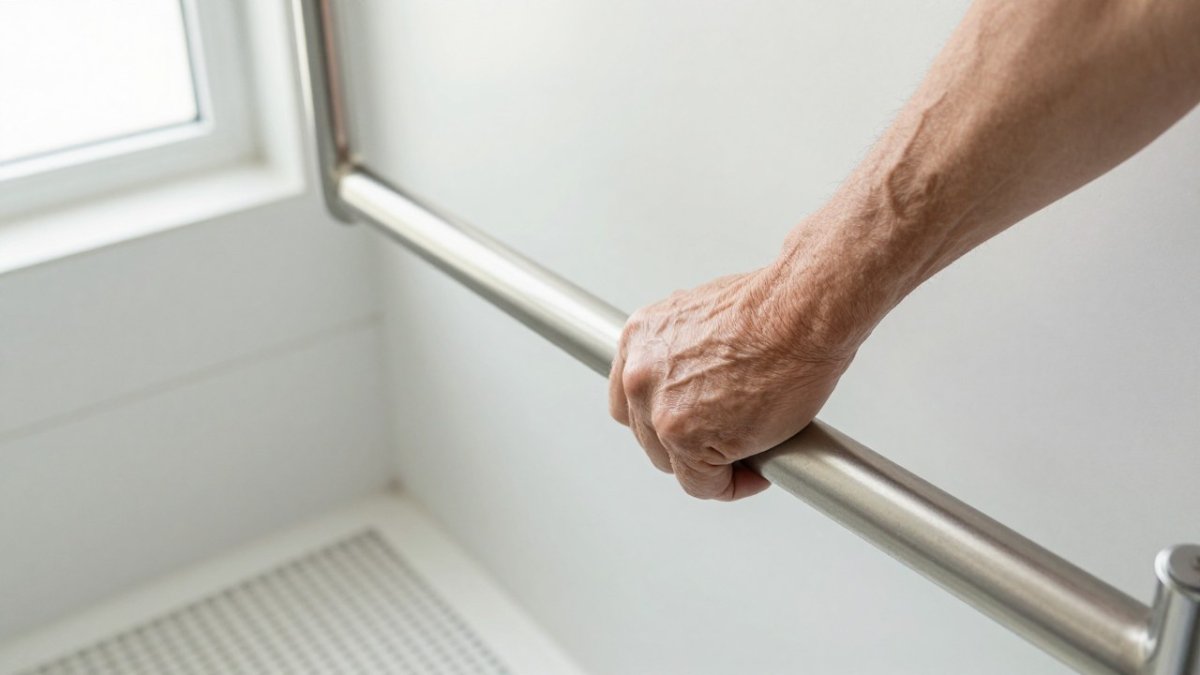
- Install a few grab bars where you put your weight
- Add non-slip mats inside and outside the tub or shower
- Improve lighting so you can see the floor and the edges
None of these require a contractor. Most people can handle them in an afternoon.
Grab Bars and Where to Put Them
Grab bars are the single most useful fix for most bathrooms. Put them where your hands naturally reach when you sit, stand or step over the tub wall.
Mount them into wall studs or solid blocking, not drywall anchors. For the full sequence, see step-by-step installation process. A bar that pulls out under your weight is worse than no bar at all.
Non-Slip Flooring and Bath Mats
A good bath mat with suction cups or a rubber backing is a bargain. Look for one that stays flat and doesn’t curl at the edges. Replace it when the suction weakens or the surface wears smooth.
Non-slip strips or textured tape on the tub floor work well too. Clean them regularly, because soap scum makes everything slippery again.
Shower Seats, Handheld Heads and Easier Controls: Mid-Range Upgrades
Once the cheap fixes are in, the next tier is about making the shower doable while seated. This tier is often where people feel the biggest jump in confidence, and where money is most easily wasted on the wrong product. A seat is not a seat. A handheld is not a handheld.
Shower Seats and Benches: Match the Seat to the Body
The right seat depends on how you get into the shower and how long you can stand. A few common patterns:
- Balance issues but you can stand and step: A wall-mounted fold-down seat keeps the floor clear and gives you a perch for washing and drying. Look for a model rated for at least 250 pounds and mounted into studs or solid blocking, not drywall anchors.
- You tire quickly or get dizzy: A freestanding bench with rubber-tipped legs and a backrest lets you sit through the whole shower. Check the leg spread so it does not wobble on a sloped shower floor.
- You use a walker or wheelchair for the transfer: A built-in or fold-down seat inside a curbless shower, paired with a handheld on a slide bar, is usually the safer arrangement. A freestanding bench in a curbed shower can become an obstacle.
Measure before you buy. Seat height matters more than most people think: too low is hard to rise from, too high and your feet dangle. Aim for a height that lets you keep both feet flat on the floor.
Watch out: A suction-cup or tension-pole seat is not a grab bar and is not a seat you should trust with your full weight.
Handheld Showerheads and Slide Bars
A handheld showerhead on a slide bar is one of the best values in the whole bathroom. It lets you rinse while seated, direct water away from a surgical site or sensitive skin, and hand the sprayer to a caregiver without contorting.
Check the connection type before you buy. Most handhelds use a standard half-inch connection, but older shower arms and some European fixtures do not.
Faucets, Controls and Lever Handles
Round knobs are hard on arthritic hands and hard to operate with soapy fingers. Lever-style handles and single-handle pressure-balance valves are easier to grip and let you set temperature with one motion.
Anti-scald protection matters here too. A pressure-balance valve limits how hot the water can get if someone flushes a toilet or starts a load of laundry. That is not a luxury.
Toilet Safety: Raised Seats, Rails and Transfer
Standing up from a low toilet is one of the most common trouble spots I see. A raised toilet seat with a locking mechanism and a weight rating is a reasonable first step.
Watch out: A raised seat that does not lock down can slide. A frame that is not adjusted to the floor can rock.
Lighting and Visibility
You do not need a lighting designer. You need light where your hands and feet are. A motion-sensor night light on the path from the bed to the bathroom, a brighter bulb over the mirror, and a light inside the shower stall all reduce the squinting and guessing that lead to missteps.
What This Tier Usually Costs
I will not quote you a single number, because product cost and installation cost are two different animals and they vary by market. The pattern: the seat and the handheld are usually the cheapest part of this tier. The valve replacement and any electrical work for new lighting are where the labor adds up.
When to Bring In an Occupational Therapist
If the person using the bathroom has had a recent fall, a stroke, a joint replacement, or a progressive condition that is changing month to month, a seat and a handheld may not be enough.
If you want a second set of eyes on a product list or an estimate before you spend, that is exactly what I do. You can follow step-by-step guidance on booking an in-home bathroom safety assessment.
Here is how the common mid-range options compare on the points that matter most when you are choosing one.
| Option | Best for | Key difference |
|---|---|---|
| Wall-mounted fold-down seat | Balance issues, can stand and step | Keeps floor clear; mount into studs or blocking |
| Freestanding bench | Tires quickly or gets dizzy | Sit through the whole shower; check leg spread on slope |
| Built-in or fold-down seat in curbless shower | Uses a walker or wheelchair | Safer transfer; freestanding bench can obstruct a curbed shower |
| Handheld showerhead on slide bar | Rinsing while seated | Lets you direct water and hand sprayer to a caregiver |
| Lever handles and pressure-balance valve | Arthritic or soapy hands | Single motion; limits how hot water can get |
| Raised toilet seat with locking mechanism | Standing up from a low toilet | Must lock down; test with full weight |
Walk-In Tubs, Tub Cuts and Roll-In Showers: Costs and Tradeoffs
Sometimes the bathroom itself is the problem. A high tub wall can make every bath a balancing act.
The main options:
- Walk-in tub: A tub with a door you step through, which can support seated showering and deep soaking. It requires careful installation, plumbing and electrical work, and the door seal must be checked regularly.
- Tub cut or transition tub: The existing tub is cut down to lower the wall height. This costs less than a full replacement but can affect the tub’s strength and warranty.
- Roll-in shower: A curbless shower with a gentle slope. It works well for wheelchair users but needs enough floor space and proper drainage.
A walk-in tub will not suit every mobility need. Some people are better served by an accessible shower or a tub cut.
For a closer look at the conversion process, read our Bath Tub to Walk-In Shower Conversion: 7-Step Guide. If you are comparing full walk-in tubs, our Walk-In Shower With Bathtub: 2026 Buying Guide covers the tradeoffs before you choose a model.
Watch out: Walk-in tubs can take a long time to fill and drain.
Senior Bathroom Remodel Grants and How to Look for Them
Money for bathroom changes exists, but it is not sitting in one pile with a sign on it. It is scattered across federal programs, state waivers, local agencies and nonprofits, and the rules change more often than the weather. I have watched families give up because they called one office, got a no, and assumed the answer was no everywhere.
First, Understand What You Are Asking For
Most of what people call a grant is really one of four things:
- A Medicaid home and community-based services waiver. This is not a grant you apply for directly. It is a benefit that may cover home modifications for people who meet the state’s functional and financial eligibility rules; check with your state Medicaid office. Coverage and waiting lists vary widely by state.
- An Older Americans Act program administered through your Area Agency on Aging. These often fund home repair and modification help, but the menu of services and the income limits are set locally.
- A federal loan or grant program. USDA housing programs and VA programs for veterans with service-connected needs may be relevant; eligibility should be confirmed with each agency. Each has its own eligibility rules and application process.
Medicare generally does not pay for bathroom modifications, so check coverage details with your plan before building a budget around any payment.
How to Apply for a Medicaid Waiver Modification
The waiver path is the one most likely to cover a larger modification, and it is also the one with the most paperwork. Here is the sequence that usually works:
- Call your state Medicaid office and ask specifically about home and community-based services waivers that cover home modifications. Ask which waivers are open for new enrollment and whether there is a waiting list.
- Ask for the functional eligibility criteria in writing. These are usually based on activities of daily living, not just income.
- Request an assessment. A case manager or assessor typically visits the home and documents the need.
- Get the modification prescribed. In many states, the request needs a recommendation from a qualified professional, sometimes an occupational therapist.
- Use an approved provider. Many waivers require the work to be done by a provider enrolled with the state. Ask for the list before you sign a contract with anyone.
- Keep every document. Denials can be appealed, and deadlines are short.
Watch out: A waiver approval is not a blank check. There is usually a cost cap per person or per project, and the cap is set by the state, not the contractor. Ask what the cap is before you design the project.
How to Work With Your Area Agency on Aging
Contact your local Area Agency on Aging to learn about available home modification programs. When you call, do not ask “Do you have grants?” Ask these questions instead:
- Which home modification programs do you fund or refer to in my county?
- What are the income limits and the age requirements?
- Is there a waiting list, and how long is it running?
Get the answers in writing, even if it is just an email confirming the conversation.
Veterans and USDA Pathways
If a veteran in the household has a service-connected disability, ask the VA about home modification grants for adaptations. The VA has specific programs for this, and the application goes through the VA, not a contractor. For rural households, USDA housing programs sometimes include repair and accessibility provisions. Both pathways have income and property rules, so confirm eligibility before you plan around any figure.
What to Ask Any Program Before You Count on It
Every program, whether public or nonprofit, should be able to answer these in writing:
- Who qualifies, and what documentation proves it?
- What work is covered, and what is excluded?
- Is there a dollar cap, and is it per project or per person?
If a program cannot answer these questions, ask for a supervisor. If a private company promises you a specific grant amount without showing you the official program rules, walk away.
The Order I Would Spend the Money In
If you are juggling a limited budget and a long wish list, prioritize by risk, not by wish.
If you are staring at a denial letter or a confusing program rule and you want a second opinion before you appeal or spend, call the team at BentleyBaths.com or 800-688-0055. Reading fine print carefully is worth the effort.
Low-Cost Bathroom Accessibility Upgrades You Can Do This Month
If you want to act this week, these changes take little time and little money:
- Add a second grab bar beside the toilet and one at the tub entry
- Put a non-slip mat both inside and outside the shower
- Swap a round doorknob for a lever handle
Pick two or three and finish them before starting anything else. Small wins build momentum, and they reduce risk right away.
Book a Bathing Assessment Before You Spend a Dollar
Here is my honest advice: do not buy anything large until someone has looked at your actual bathroom.
A bathing assessment is the fastest way to get that clarity.
If you are not ready for an in-person visit, start with our Free Safe Bathing Course to learn practical habits that lower risk today.
Frequently Asked Questions
Will Medicare pay for bathroom modifications?
Original Medicare generally does not pay for home modifications such as grab bars, shower seats or walk-in tubs, because it treats them as non-medical home improvements. Some Medicare Advantage plans and Medicaid waiver programs offer limited home modification benefits, and coverage varies by plan and state. Check your plan’s summary of benefits, ask your doctor whether a mobility or bathing assessment can support a request, and confirm details directly with your plan or state agency before you rely on any payment.
Can seniors get a free bathroom remodel through government programs?
Free full remodels are rare. Some state and local programs, area agencies on aging, and nonprofit home repair organizations offer help with accessibility work for income-qualified households, often through grants or low-interest loans. Eligibility, funding amounts and waiting lists differ from place to place. Start by contacting your local area agency on aging and asking specifically about bathroom safety or home modification assistance.
What is the difference between a tub cut and a walk-in tub installation?
A tub cut lowers the threshold of your existing tub by cutting an opening in the side wall, so you can step over a lower edge, and it usually costs less than a new tub. A walk-in tub replaces the whole bathtub with a unit that has a watertight door and a seat, and it typically involves more plumbing and electrical work. Neither option suits every mobility need, so a qualified assessment is worth getting before you choose.