Skip to content

Last Updated: October 30, 2026
Quick Summary
Walk-in tubs are worth it for buyers who want full-body soaking and can sit and stand independently, but a poor use of money if you cannot bear weight to rise from a low seat. The decision comes down to your mobility today, your bathroom’s layout, and an honest total cost.
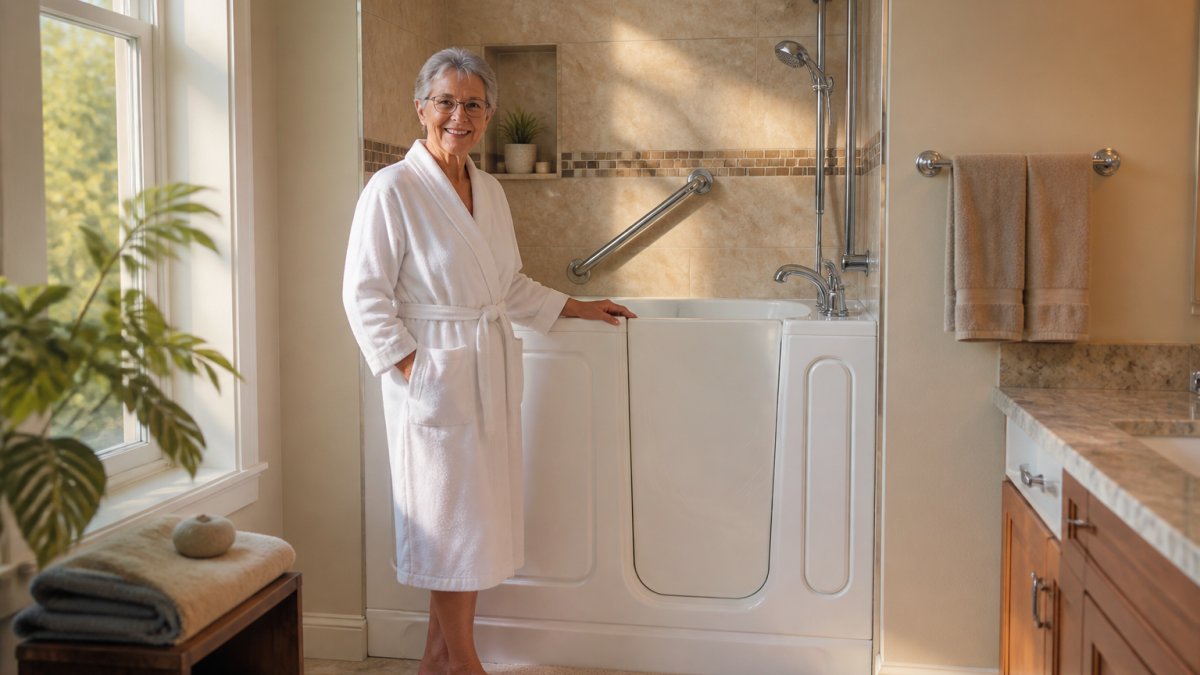
- A walk-in tub has a hinged watertight door and a low entry threshold instead of a high tub wall.
- You sit inside the tub while it fills and while it drains, so plan around that wait.
- The safety features that matter are a low threshold, non-slip floor, anchored grab bars, a seat and anti-scald technology.
- A roll-in shower suits wheelchair or walker users better because there is no threshold or door to manage.
- Ask the installer to measure your hot-water supply and flow rate at the tub location before signing.
Table of Contents
- Are Walk-In Tubs Worth It? The Short Answer First
- Walk-In Tub Pros and Cons, Weighed Honestly
- Walk-In Tub Safety Features That Actually Matter
- Walk-In Tub Fill and Drain Time: The Daily Reality
- Walk-In Tub Alternatives Worth Comparing Before You Buy
- What Drives the Total Cost of Ownership
- Book a Free Buying Review Before You Sign Anything
- Frequently Asked Questions
Are Walk-In Tubs Worth It? The Short Answer First
I’m George Bentley, and I’ve spent a long time around accessible bathing products, long enough to have heard every pitch and every objection.
Here is the definition that matters.
That low threshold is the whole point. Everything else, the jets, the heated seat, the handheld showerhead, is a bonus layered on top of it.
Below, I’ll walk you through the pros and cons, the safety features that genuinely matter, the daily reality of fill and drain time, the alternatives, and what actually drives the total cost of ownership.
Walk-In Tub Pros and Cons, Weighed Honestly
Start with the honest list, because a fair comparison beats a sales pitch every time.
The Case For a Walk-In Tub
A walk-in tub solves a real problem: getting the whole body clean and soaked without climbing over a wall. For someone with arthritis, limited mobility, or balance concerns, that is not a small thing.
- Easy access. A low threshold and a built-in seat reduce the awkward leg lift that makes a traditional bathtub risky.
- Independent bathing. Many people keep bathing without a caregiver in the room, which matters for dignity and quality of life.
- Full-body soaking. A shower cannot provide deep immersion. If warm water soothes aching joints, only a tub delivers that.
For a deeper look at the tradeoffs, our walk-in tub pros and cons guide breaks the decision down point by point.
The Case Against, and Who Should Say No
Here is what the brochures leave out. A walk-in tub is not right for everyone, and I’ll tell you when to walk away.
- You must be able to sit and stand. If you cannot bear weight to stand up from a low seat, a tub door may not help. An occupational therapist should assess that, not a salesperson.
- You wait for the water. You sit inside while the tub fills, and you sit inside while it drains. That is the subject of a later section.
- It is not a cure. Warm water may ease discomfort. It does not treat arthritis, high blood pressure, or circulation disease.
If your mobility is severely limited, a roll-in shower may serve you better. We’ll compare them shortly.
Walk-In Tub Safety Features That Actually Matter
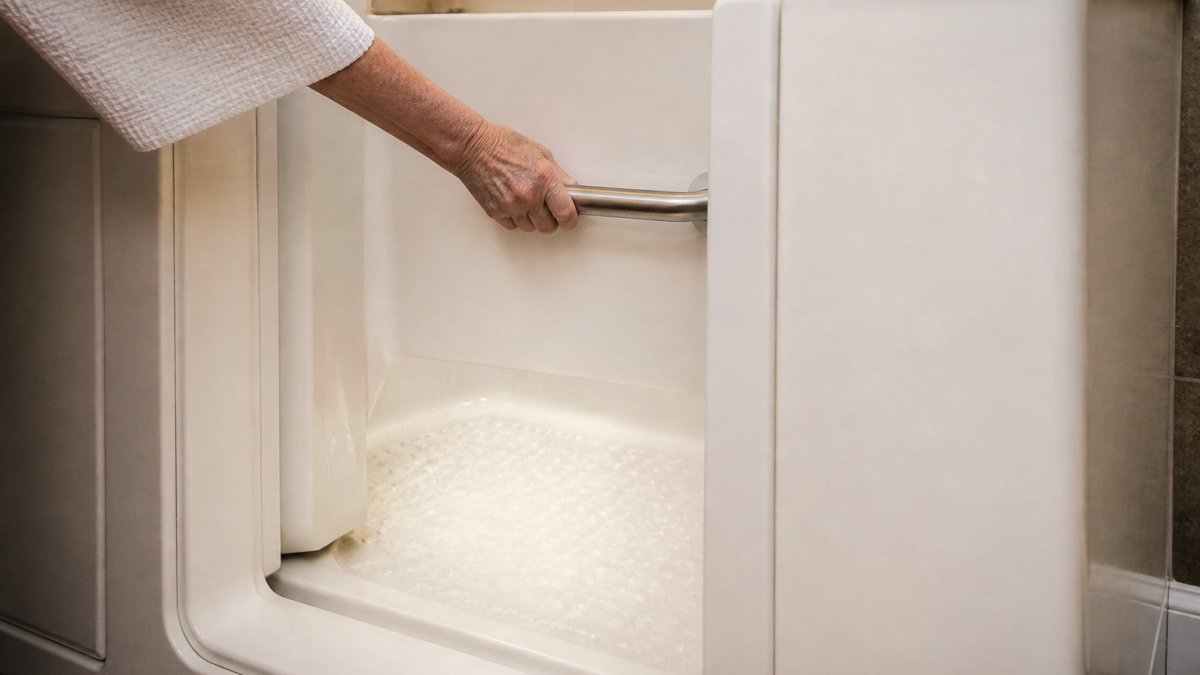
The features that genuinely reduce risk are the unglamorous ones: a low threshold, a textured non-slip floor, sturdy grab bars anchored into framing, a built-in seat, and anti-scald technology that caps water temperature.
What a Tub Can and Cannot Prevent
A walk-in tub can reduce the risk of the specific fall that happens when you swing a leg over a high tub wall. That is a real and common injury.
What it cannot do is make you fall-proof. Official guidance on falls among older adults is worth reading before you buy anything, and so is our deeper piece on walk-in tub safety facts. If you’d rather learn the practical techniques in one sitting, our Free Safe Bathing Course walks through transfers, water temperature, and bathroom setup at no cost.
Walk-In Tub Fill and Drain Time: The Daily Reality
Here is the part of the brochure that gets folded under the table. A walk-in tub is not a shower. You do not step in, get wet, and step out. The sequence is fixed: you open the door, you sit down, you close and latch the door, the tub fills with you already inside, you soak, you drain the tub with you still inside, and only then do you open the door and step out.
That sequence is not a design flaw. It is how a watertight door works. But it changes your morning, and nobody should learn it after the contract is signed.
Why the Wait Happens
A walk-in tub holds far more water than a shower uses, and it fills through the same household plumbing that feeds your sink. Two things govern how long you sit there:
- Your water heater’s capacity and recovery rate. A standard tank heater has a limited supply of hot water. Once it is spent, you are waiting on the recovery rate, not the tub.
- Your flow rate at the fixture. Older plumbing and long runs from the heater reduce gallons per minute, which stretches fill time.
Draining is its own wait. A gravity drain moves water at a fixed rate, and many walk-in tubs have a smaller drain opening than a conventional tub.
I will not hand you a stopwatch number, because it depends on your heater, your plumbing, and the tub’s capacity. What I will tell you is that the honest answer comes from measuring your own system, not from a showroom script.
The Cold-Tub Problem, and How to Beat It
Sitting in a filling tub in a cool bathroom is the complaint I hear most. It is solvable, and the fixes are cheap compared to the tub:
- Warm the room first. A bathroom space heater run for ten minutes before you undress changes the whole experience.
- Keep a robe and towel within arm’s reach. You will be seated and wet longer than in a shower.
- Fill with hot water first, then temper with cold. Starting hot preserves your heater’s usable supply and gets warm water to you sooner.
Before you sign anything, ask the installer to measure your hot-water supply and flow rate at the tub location. A written estimate that ignores your heater is an estimate built on hope.
What This Means for Whether It Is Worth It
If you want a five-minute rinse before work, a walk-in tub will frustrate you. If the point is a long, warm soak that soothes stiff joints, the fill and drain time is the price of admission, and you plan around it.
For the plumbing math behind fill times, see our detailed answer on how long a walk-in tub really takes to fill.
Walk-In Tub Alternatives Worth Comparing Before You Buy
Most guides hand you a table and call it a comparison. A table tells you what exists. It does not tell you which one fits your body, your bathroom, and the person who may be helping you next year. So let us do this properly.
The Real Question Behind the Choice
Before you compare products, answer three questions honestly:
- Can you bear weight to stand up from a low seat, unaided? If not, a tub door does not solve your problem, and an occupational therapist should assess you before any purchase.
- Is soaking the point, or is getting clean the point? A shower cannot give you deep immersion. A tub cannot give you a two-minute rinse.
- Will your needs change, and who will be helping you? A solution that works today but blocks a caregiver tomorrow is a poor investment.
The Options, Side by Side
| Option | Best For | Main Tradeoff |
|---|---|---|
| Walk-in tub | People who want soaking plus seated showering | Fill and drain wait time; you sit inside during both |
| Roll-in shower | Wheelchair or walker users who need level access | No deep soaking |
| Accessible shower with seat and grab bars | Lower-budget safety upgrades, mild balance concerns | Still a step-over unless the threshold is converted |
| Tub cut conversion | Keeping an existing tub on a tighter budget | Less feature depth; depends on the existing tub |
| Grab bars, lighting, and slip-resistant surfaces only | Early planning, mild concerns | No structural change, so no change to the tub wall |
Transfer Safety: The Part the Table Cannot Show
Here is what the table leaves out. With a walk-in tub, you generally enter and close the door before the tub fills, and you remain seated while it drains.
But it also means you must be able to operate the door latch independently, or have someone who can.
A roll-in shower wins on daily convenience for anyone using a wheelchair or walker, because there is no threshold and no door to manage.
Caregiver Needs and Changing Mobility
If a spouse or adult child helps with bathing, the layout matters as much as the features. Can a caregiver stand beside the tub and reach the bather?
Plan for the body you will have in five years, not just the one you have today. That is not pessimism. It is the same reasoning as buying a car with a backup camera.
Choose the option that matches your mobility today, your bathroom’s actual dimensions, and your caregiver’s access. If those three do not line up, no feature list will rescue the decision.
For a direct comparison of the two most common choices, read roll-in shower vs walk-in tub.
What Drives the Total Cost of Ownership
Purchase price is only part of the bill. The real cost includes removal of the old tub, plumbing and electrical work, floor and wall repair, permits where required, and the tub itself.
Pricing depends on the scope of each project, so please request a written estimate from Bentley Baths for current pricing.
Watch out: a low advertised price often excludes installation, and the “sale” that expires Friday frequently reappears next week. Our installation cost breakdown shows what each component typically involves.
Book a Free Buying Review Before You Sign Anything
Here is the challenge I’ll leave you with. Walk-in tubs are worth it when the fit is right, the installation is honest, and the price is transparent.
That is where we come in. At Bentley Baths, we offer a free in-home or virtual evaluation by an age-in-place specialist who checks your bathroom’s actual layout before recommending anything.
Get started with Bentley Baths and get a straight answer before you spend a dime. Call 800-688-0055 or visit BentleyBaths.com.
Frequently Asked Questions
What are the main advantages and disadvantages of walk-in tubs?
The advantages are real: a low entry threshold, a built-in seat, and grab bars make getting in and out less of a balancing act, and a walk-in tub supports seated showering plus full-body soaking that a shower cannot match. The disadvantages are equally real. You wait for the tub to fill and drain before you can open the door, the unit costs more than a standard tub, and installation can mean plumbing and electrical work. Weigh those tradeoffs against your mobility, your bathroom, and your budget before deciding.
How long does it take to fill and drain a walk-in tub?
Fill and drain time depends on your water pressure, your water heater, and the tub’s design, so ask for the manufacturer’s specifications for the exact model you are considering. The practical point is that you sit inside while the tub fills and stay inside until it drains, because the door seal only holds when the water level is below the door. Plan for that time and make sure your hot-water supply can handle a full tub before you commit.
Who is a walk-in tub best suited for?
Walk-in tubs tend to suit people with limited mobility, balance concerns, or arthritis who want to keep bathing independently and value deep soaking. They also fit adults planning ahead for changing mobility. They are not right for everyone. Someone who needs a wheelchair roll-in or cannot tolerate sitting in a filling tub may be better served by an accessible shower or another option, which is why an occupational therapy or age-in-place assessment is worth having first.
What should you consider before installing a walk-in tub?
Check the bathroom’s dimensions and doorway clearance, the condition of your plumbing and electrical service, and whether your water heater can supply a full tub. Ask for a written estimate that spells out the installation scope, what happens if the subfloor or framing needs work, the warranty terms, and who is accountable for the install. A free buying review or second opinion before you sign can catch surprises that a showroom price never mentions.