Skip to content

Last Updated: October 31, 2026
Quick Summary
A safer bathroom for aging parents starts with watching them use the room, then adding grab bars anchored into solid blocking, non-slip surfaces, better lighting and a toilet at a comfortable height. Match each fix to your parent’s mobility, balance, vision and judgment, not to what a showroom suggests.
- Walk through a normal bath or shower routine with your parent and have them narrate each step.
- Grab bars must fasten into solid wood blocking or a listed anchor, never drywall alone.
- Get the grab bar load rating in writing before anyone drills.
- Match the shower setup to four needs: mobility, balance, vision and cognition.
- An occupational therapy home safety assessment can point you to the right fix before you spend.
Table of Contents
- Start With a Walk-Through Assessment With Your Parent
- Build a Bathroom Safety Checklist for Seniors
- Place Grab Bars Where Hands Will Really Reach
- Choose the Right Shower Setup for Easier Entry and Exit
- Fix Flooring, Lighting and Toilet Height
- Get an Occupational Therapy Home Safety Assessment Before You Spend
- Set a Budget, Prioritize Fixes and Book Your Next Step
- Frequently Asked Questions
Start With a Walk-Through Assessment With Your Parent
Planning a safer bathroom for aging parents starts with one simple habit: watching them use the room. Most families skip this step and go straight to shopping.
Sit down with your parent and walk through a normal bath or shower routine together. Ask them to narrate what they do, step by step, from the door to the towel.
Pay attention to these moments:
- Stepping over the tub wall or shower threshold
- Reaching for towels, soap or a sink edge
- Getting up from the toilet
A walk-through like this tells you far more than a checklist ever will.
Watch How They Actually Move in the Bathroom
Look for the small workarounds. A parent who holds the sink while turning, or who sits on the edge of the tub before swinging their legs over, is telling you where the risk lives.
Note the timing too. Many people feel steady at the start of their bath and unsteady when they stand up with wet skin and a slick floor.
A common mistake is assuming a parent who “manages fine” doesn’t need changes. Managing fine often means managing with extra effort, and that effort gets tiring fast.
Build a Bathroom Safety Checklist for Seniors
A written checklist keeps the planning focused. Start with the basics and mark what your parent needs right now versus what can wait.

Use this list as a starting point:
- Grab bars at the tub or shower, and beside the toilet
- Non-slip mat or textured surface inside the tub or shower
- Bright, even lighting with a night light on the route to the toilet
Bring the list to your parent and go through it together. Their answers matter more than your assumptions.
Place Grab Bars Where Hands Will Really Reach
A grab bar is not a decoration. It is a structural promise, and most of the ones I see in family bathrooms are making a promise they cannot keep.
Here is the uncomfortable truth: the bar itself is rarely the weak link. The wall behind it is. A bar yanked hard by a grown adult can pull straight out of drywall, and when it does, your parent goes down with a handful of chrome and a fresh hole in the wall.
Find the Blocking Before You Find the Bar
Grab bars need to fasten into solid wood blocking, or into a proper anchor designed for the wall assembly. In a typical bathroom, that means finding studs or installed blocking behind the tile.
If there is no blocking, you have options, and they are not equal:
- Open the wall and add wood blocking, then patch and re-tile. Most reliable, most disruptive.
- Use a code-listed anchor system rated for the wall assembly and the load. Ask for the manufacturer’s documentation.
- Skip the bar and choose a different support, such as a floor-to-ceiling transfer pole or a properly rated shower seat with arms.
What I would not do is trust a suction-cup bar for body weight. Those are fine for steadying a hand on a dry surface. They are not a fall-prevention device, and they can release without warning.
Where the Hands Actually Land
The best placement method I know is embarrassingly low-tech. Have your parent act out the routine while you watch, then mark the wall with painter’s tape where the hand goes. Do it standing, sitting, and rising.
A few patterns hold up across most bathrooms:
- At the toilet: a horizontal bar beside the seat, roughly at forearm height when seated, plus a vertical bar or a bar angled up toward the standing position if your parent needs a pull-up assist.
- At the tub or shower entry: a vertical bar just outside the threshold gives a hand something to grab before the foot moves.
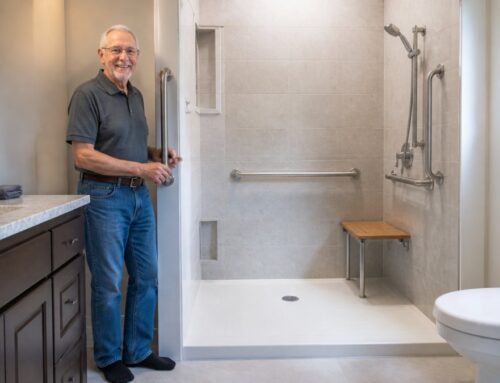
- Inside the shower or tub: a horizontal bar along the long wall, positioned so the hand lands without a big reach.
Exact heights depend on the person, not a universal chart. For step-by-step install and placement guidance for showers, see Grab Bars for Shower: Install Guide & Placement.
Load Ratings and the Paper Trail
Ask for the load rating in writing. Grab bars sold for bathing areas are typically tested and labeled for a stated load, and reputable manufacturers publish that number.
Also ask who is doing the work and what happens if the bar loosens. Get the installer’s name, license where required, and warranty terms on the estimate.
One more thing. A grab bar is not a substitute for an occupational therapy assessment when balance is genuinely impaired. Bars support a steady hand.
If you want a second set of eyes on placement before anyone drills, that is exactly the kind of question worth a phone call before you spend. Call 800-688-0055 or visit BentleyBaths.com.
Never mount a grab bar into drywall alone and never rely on a suction-cup model for body-weight support. Confirm blocking or a listed anchor, and get the load rating in writing.
Choose the Right Shower Setup for Easier Entry and Exit
Most articles hand you a menu of bathing options and wish you luck. That is backwards. The right setup is not the one with the best brochure. It is the one that matches how your parent actually moves today, and how that is likely to change.
So let’s build the decision around your parent, not around the product.
Start With Four Questions About Your Parent
Before you compare a single fixture, sit down and answer these honestly:
- Mobility: Can your parent lift a foot over a curb without holding on? Can they stand for the length of a shower, or do they need to sit?
- Balance: Do they steady themselves on walls, counters, or a cane? Have they had a near-miss in the bathroom already?
- Vision: Can they see the tub edge, the floor, and the controls clearly? Poor contrast and dim light turn a small step into a guess.
- Cognition: Can they reliably operate a door latch, a set of controls, and a temperature dial? Memory and judgment matter as much as strength.
A parent who stands well but has poor vision needs different fixes than a parent with strong eyes and shaky balance. Treating every older adult as the same risk is how families buy the wrong thing.
Match the Setup to the Need
Here is how the main options line up against those four questions.
| Setup | Entry and Exit | Strong Fit When | Real Drawbacks |
|---|---|---|---|
| Low-threshold shower | Small step over a low curb | Parent stands and balances well, vision is decent | Water can escape onto the floor without a proper curb or drain slope |
| Roll-in shower | Wheelchair or walker rolls straight in | Parent uses a wheelchair or walker full time | Needs space, proper slope, and often a larger remodel |
| Shower with a built-in seat | Step in, then sit | Parent can step but cannot stand safely for long | Seat must be anchored, not a flimsy add-on |
| Walk-in tub | Door opens, seated entry | Parent needs to sit for entry and wants soaking | Fill and drain time, door must be operated correctly every time |
| Tub cut or transition tub | Lower wall to step over | Parent has limited leg lift but wants to keep the tub | Still requires some step-over and careful footing |
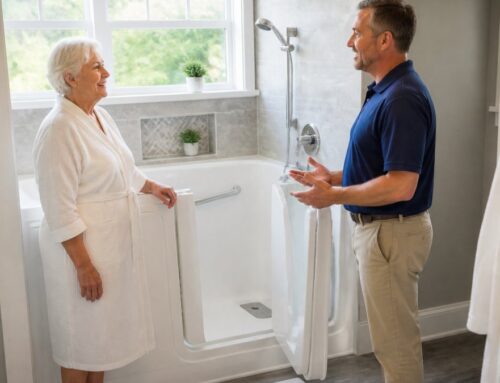
A properly equipped walk-in tub can support seated showering and full-body soaking, and a standard shower cannot give you deep immersion. That is the honest tradeoff. But a walk-in tub is not right for everyone. If your parent cannot reliably work a door latch or judge water temperature, a different setup, or a qualified assessment first, may serve them better.
The Details That Decide Whether It Works
Ask any installer these questions before you commit:
- What is the exact entry threshold height, in inches?
- Which way does the door swing, and is there room for it?
- Where is the seat, and how high is it from the floor?
Those answers, not the showroom lighting, tell you whether a setup fits your bathroom and your parent.
Bring your walk-through notes and your answers to the four questions to any appointment. A good installer will use them. A pushy one will ignore them, and that tells you plenty.
If you’re weighing a walk-in tub against other options, a free Walk-In Tub Buying Review With George can help you sort through the tradeoffs before you commit.
Fix Flooring, Lighting and Toilet Height
Three small fixes often prevent the falls that cause the most worry.
Flooring: Swap loose rugs for non-slip mats with a rubber backing.
Lighting: Older eyes need more light.
Toilet height: A toilet that sits too low forces a hard push to stand up.
Start with the fixes that cost the least and do the most. Flooring and lighting often come before a full remodel.
Get an Occupational Therapy Home Safety Assessment Before You Spend
Before you buy anything big, consider a home safety assessment from an occupational therapist.
Many people skip this step because it sounds like an extra expense. It can save money by pointing you to the right fix the first time.
Bring your walk-through notes to the appointment. To see how to book a professional in-home bathroom safety assessment step by step, read Book an In-Home Bathroom Safety Assessment.
If you’d rather start with a structured home routine, a free Safe Bathing Course walks through bathing safety step by step.
Set a Budget, Prioritize Fixes and Book Your Next Step
Plan your spending in order of risk, not in order of what looks nicest. Start with grab bars, non-slip surfaces and lighting. Those are usually affordable and can be done quickly.
Get written estimates from at least two installers. Ask what’s included, who handles plumbing and electrical work, and what the warranty covers. If someone pushes you to decide today or offers a discount that expires tomorrow, slow down.
Here’s a simple order to follow:
- Install grab bars and non-slip mats this month
- Improve lighting and clear the floor route
- Get an occupational therapy assessment
- Get written estimates for larger upgrades
- Decide on the bigger project with the full picture
If you want a second look at your plans or a review of an estimate you already have, reach out to George Bentley at Bentley Baths. Call 800-688-0055 or visit BentleyBaths.com to talk through your parent’s routine and the options that fit it.
Frequently Asked Questions
How do I assess bathroom safety for an aging parent?
Watch your parent use the bathroom for a normal morning routine, from stepping in and out of the shower or tub to sitting and standing from the toilet. Note every moment of hesitation, grabbing for furniture, or wet floor patch. Ask them where they feel unsteady and what they avoid doing. Then walk the room yourself with the same routine in mind. Write down what you see, and use that list to decide which changes come first.
Where should grab bars be placed in a senior’s bathroom?
Put grab bars where your parent naturally reaches: beside the toilet for sitting and standing, on the shower or tub wall for entering and exiting, and near the sink if they need support when standing. Have a qualified installer anchor them into wall studs or solid blocking, not just drywall. Test each bar with real body weight before calling the job finished, and check the mounting screws every few months.
Is a walk-in tub or an accessible shower better for an older adult?
It depends on how your parent moves and what they enjoy. A walk-in tub with a built-in seat and door can support seated showering and full-body soaking, which a shower cannot offer. An accessible shower with a low threshold, a bench, and a handheld spray may suit someone who only needs to shower and has trouble stepping over a tub wall. Get an occupational therapy assessment before choosing, and compare written estimates for installation scope, not just the unit price.
What should I ask before hiring someone to modify a bathroom?
Ask for a written estimate that lists every task, including demolition, plumbing, electrical work, and any permits. Confirm who installs the equipment, who handles warranty service, and what happens if something goes wrong. Ask whether the installer carries liability insurance and whether they have experience with accessibility work. Read the cancellation terms before you sign, and take your time with any offer that pushes a deadline.